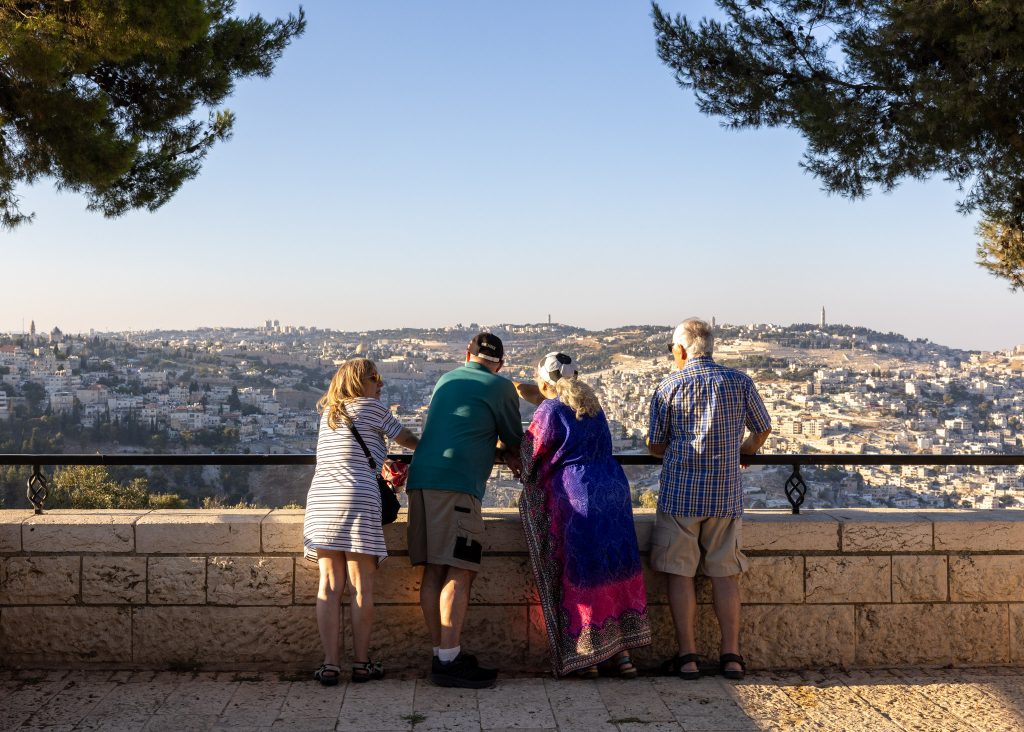
Jerusalem possesses one of the most recognizable skylines in the world. The golden dome rising above the Old City, the ancient limestone walls tracing its contours, church towers and minarets punctuating the horizon, and the surrounding hills that frame the historic basin all combine to create a one-of-a-kind landscape. Few cities present such a dramatic meeting of architecture, topography and history.

the birth of a landmark

In the years following Jerusalem’s reunification in 1967, planners began considering how best to develop a ridge in southeastern Jerusalem overlooking these extraordinary views, with suggestions for constructing a line of hotels along the hillside. When the idea was presented to Mayor Teddy Kollek, he sought the advice of American architect Louis Kahn, who was serving on the Jerusalem Committee. Kahn’s response was simple but decisive: do not build anything. Leave the ridge open. That advice shaped one of Jerusalem’s most beloved public spaces. Instead of hotels, the hillside came to house a series of interlocking promenades—sweeping public walkways where the city itself serves as the central attraction.

the promenades

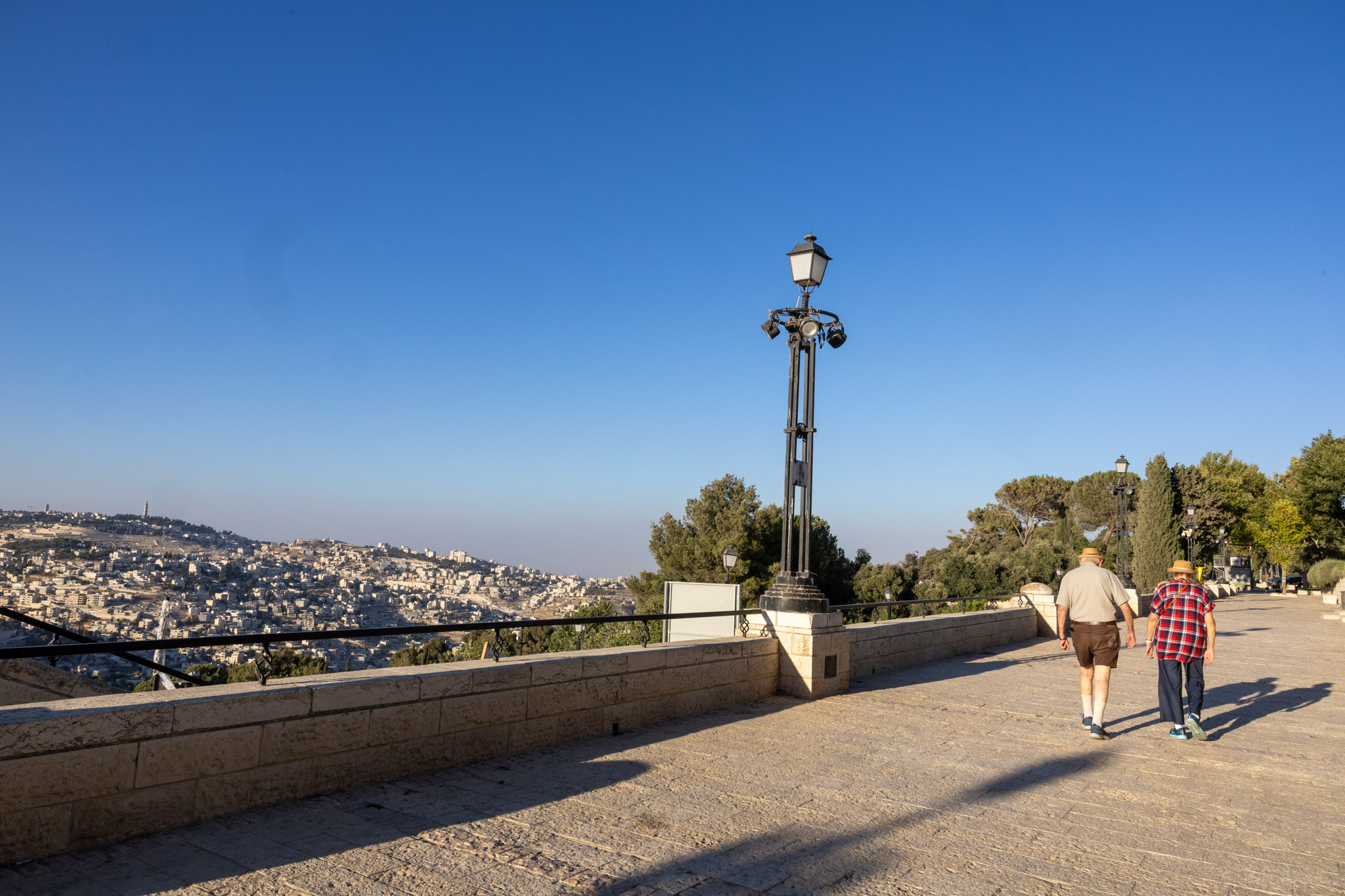
At its center lies the Walter and Elise Haas Promenade, designed by American landscape architect Lawrence Halprin together with Israeli landscape architect Shlomo Aronson. It was completed in 1987 and dedicated on Jerusalem Day marking the twentieth anniversary of the city’s reunification. The architecture of the promenade itself draws inspiration from the ancient aqueducts discovered along the very same hillsides, incorporating sweeping arches that echo the region’s historic water channels. To the west lies the Sherover Promenade, built earlier along the ridge, while to the east the Richard and Rhoda Goldman Promenade, completed in 2001, extends the experience further along the hillside. Near the entrance plaza stands Jubilee IV, a bronze sculpture by British artist Lynn Chadwick, installed in 1989. The semi-abstract figure of a strolling couple serves as a quiet tribute to the simple act the promenade invites. Over the years, the Jerusalem Foundation has played an important role in supporting the promenade’s development and has continued to assist with its upkeep, funding repairs, smoothing the paving stones, and adding shaded pergolas for visitors.
the promenades

Photo by Dana Bar Siman Tov

At its center lies the Walter and Elise Haas Promenade, designed by American landscape architect Lawrence Halprin together with Israeli landscape architect Shlomo Aronson. It was completed in 1987 and dedicated on Jerusalem Day marking the twentieth anniversary of the city’s reunification. The architecture of the promenade itself draws inspiration from the ancient aqueducts discovered along the very same hillsides, incorporating sweeping arches that echo the region’s historic water channels. To the west lies the Sherover Promenade, built earlier along the ridge, while to the east the Richard and Rhoda Goldman Promenade, completed in 2001, extends the experience further along the hillside. Near the entrance plaza stands Jubilee IV, a bronze sculpture by British artist Lynn Chadwick, installed in 1989. The semi-abstract figure of a strolling couple serves as a quiet tribute to the simple act the promenade invites. Over the years, the Jerusalem Foundation has played an important role in supporting the promenade’s development and has continued to assist with its upkeep, funding repairs, smoothing the paving stones, and adding shaded pergolas for visitors.
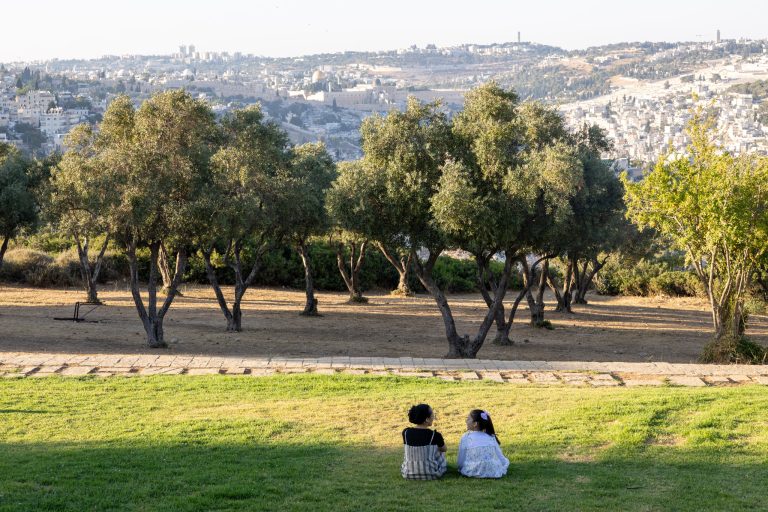
Photo by Dana Bar Siman Tov

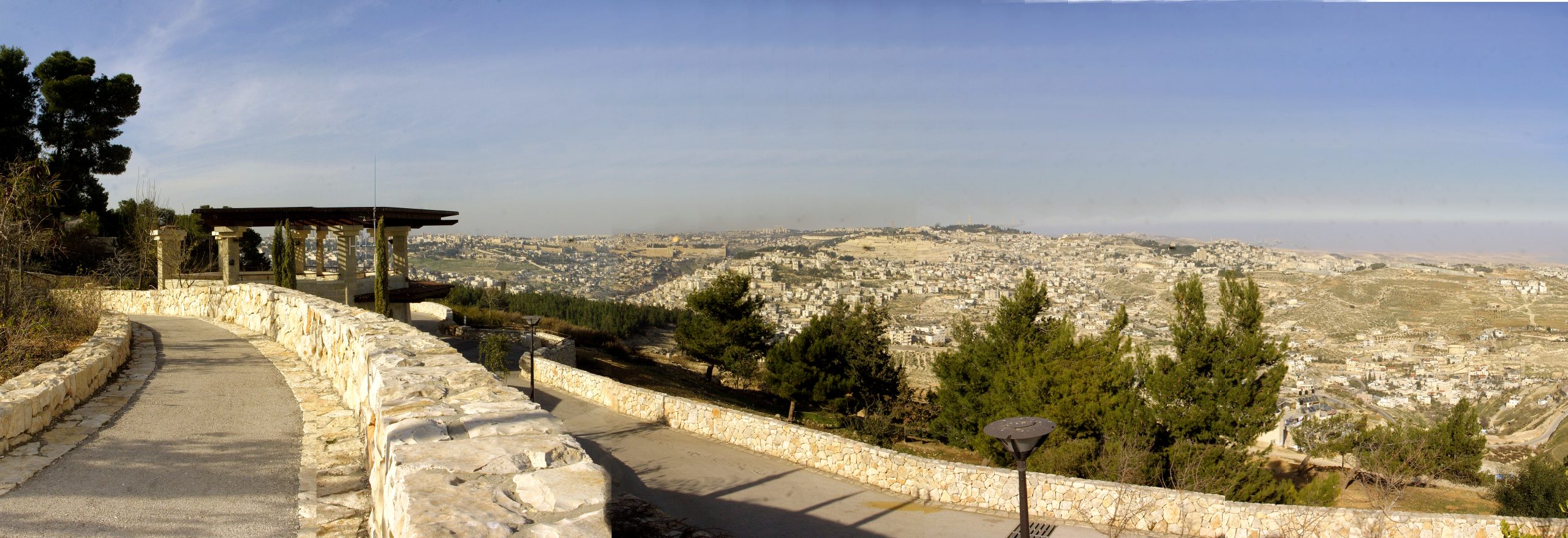
With its broad stone paths overlooking the entire historic basin of Jerusalem, from the Old City to the Mount of Olives and the distant desert horizon, the promenades have become some of Jerusalem’s most cherished public spaces and a natural gathering point for the city. From early morning until late evening, its paths fill with life from runners tracing the ridge at sunset, to families strolling with children, and groups of friends lingering along the stone terraces as the light shifts across the Old City. 

Photo by Dana Bar Siman Tov

a cherished public space

the most remarkable backdrop

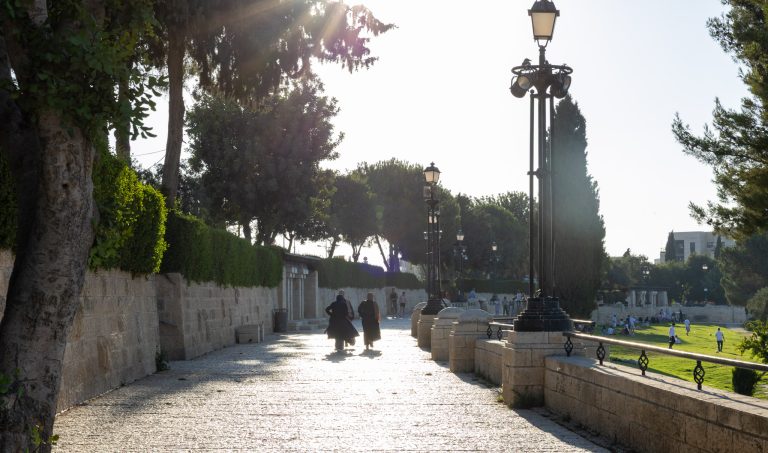
Jerusalemites come here to celebrate holidays, gather for prayer, share picnics, or simply pause together above the city. The promenades also host a wide range of public events including concerts, light shows, and festivals that transform the scenic overlook into a lively civic space. Visitors from around the world arrive to take in the sweeping panorama of Jerusalem’s historic skyline, while weddings and celebrations unfold in the event hall tucked beneath the promenade itself. In recent years, food trucks have joined the scene, allowing people to enjoy refreshments while taking in the view. Whether for quiet reflection or large gatherings, the promenades of Jerusalem’s southern neighborhood have become a shared stage for Jerusalem’s daily life, set against one of the most remarkable backdrops in the world.

Photo by Dana Bar Siman Tov

a frame for jerusalem

With its winding paths and shaded terraces, visitors walk through a landscape designed not to compete with Jerusalem, but to frame it. Along this quiet ridge, as the skyline of one of the world’s holiest cities spreads out below, one is reminded how rare it is for a place to exist simply for the sake of beauty, for the chance to pause, breathe, and just take in the view.

Previous
Next