More than a synagogue, the Hurva is a chronicle of Jerusalem itself. Destroyed and rebuilt across three centuries, its story reflects the city’s enduring cycles of loss, resilience, and renewal. Today, following careful restoration, it once again stands at the heart of the Jewish Quarter, preserving a landmark whose history is inseparable from that of Jerusalem.

layers of memory

Jewish tradition closes the Passover Seder with the words, “Next year in the rebuilt Jerusalem.” Few buildings in the city embody that sentiment as vividly as the Hurva Synagogue. Built, destroyed, and rebuilt across centuries, the synagogue has come to symbolize the cycles of loss and renewal that have shaped Jerusalem itself. Standing today in the heart of the Old City’s Jewish Quarter, the Hurva is not merely a synagogue but a structure layered with memory—its very existence the result of repeated efforts to restore what history had undone. With a landmark so closely tied to the city’s history, preservation was never simply a matter of architecture. Restoring the Hurva meant ensuring that a central chapter of Jerusalem’s story would remain visible and accessible, allowing future generations to encounter not only the building itself, but the long history of destruction, perseverance, and rebuilding that it represents.

the ruin

Photo by Dana Bar Siman Tov

The story of the Hurva begins in the early eighteenth century, when followers of Rabbi Yehuda Hehassid arrived in Jerusalem in 1700 and began constructing a synagogue on the site. Financial difficulties quickly stalled the project, and in 1721 the unfinished structure was destroyed by creditors. The abandoned site became known simply as “the ruin”—the Hurva—a name that would remain even as new buildings rose in its place.

More than a century later, Jewish communities across Europe and the Middle East raised funds to rebuild the synagogue. Completed in 1864 with the support of the Ottoman Sultan Abdulmecid and designed by the imperial architect Assad Bey, the Hurva became the largest and most prominent synagogue in Jerusalem. Its imposing dome rose above the rooftops of the Old City and became one of the city’s defining landmarks, joining the skyline alongside the domes of the Church of the Holy Sepulchre and the Dome of the Rock. Within the Jewish Quarter, the Hurva functioned not only as a place of prayer but as a central hub of communal and religious life.

Photo by Dana Bar Siman Tov

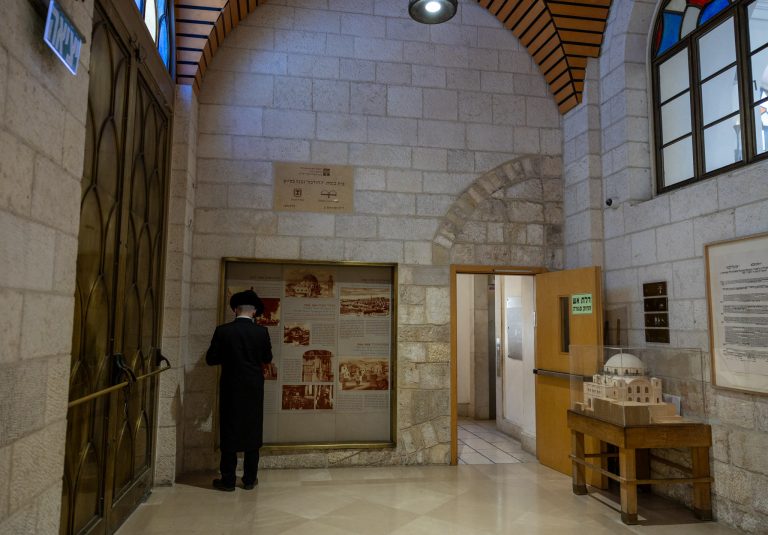
After the Jewish Quarter fell to Jordanian forces, the synagogue was severely damaged by shelling and later demolished, leaving behind little more than rubble. When Israel regained control of the Old City in 1967, the question of what to do with the site became a matter of intense debate. Some proposed leaving the ruins as a memorial to the destruction of the Jewish Quarter, while others envisioned rebuilding the synagogue entirely. The renowned American architect Louis Kahn even produced visionary modern designs for a new Hurva, though they were never realized.

reconstructing history

In the meantime, the site remained largely open. In the late 1970s, with the support of the Jerusalem Foundation, the remains of the synagogue were stabilized and a monumental sixteen-meter stone arch was constructed on the site. The arch evoked the scale of the vanished building and served for decades as a symbolic marker of what once stood there.

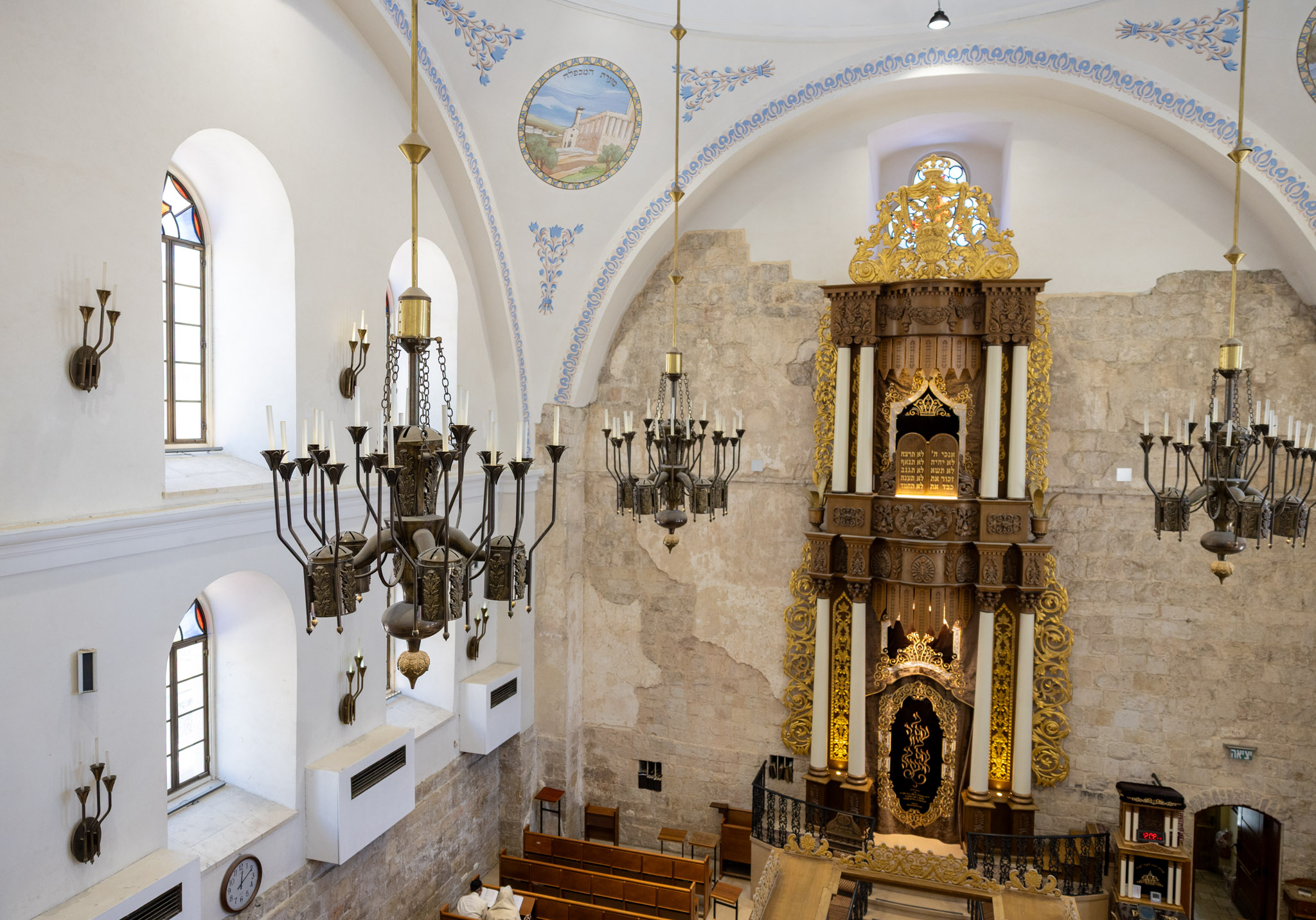
Ultimately, however, the decision was made to reconstruct the synagogue according to its nineteenth-century design. In 2006 the arch was removed and work began to recreate the historic structure. After several years of careful restoration, the Hurva Synagogue reopened in 2010, once again crowned by the large white dome that had once defined the skyline of the Jewish Quarter.
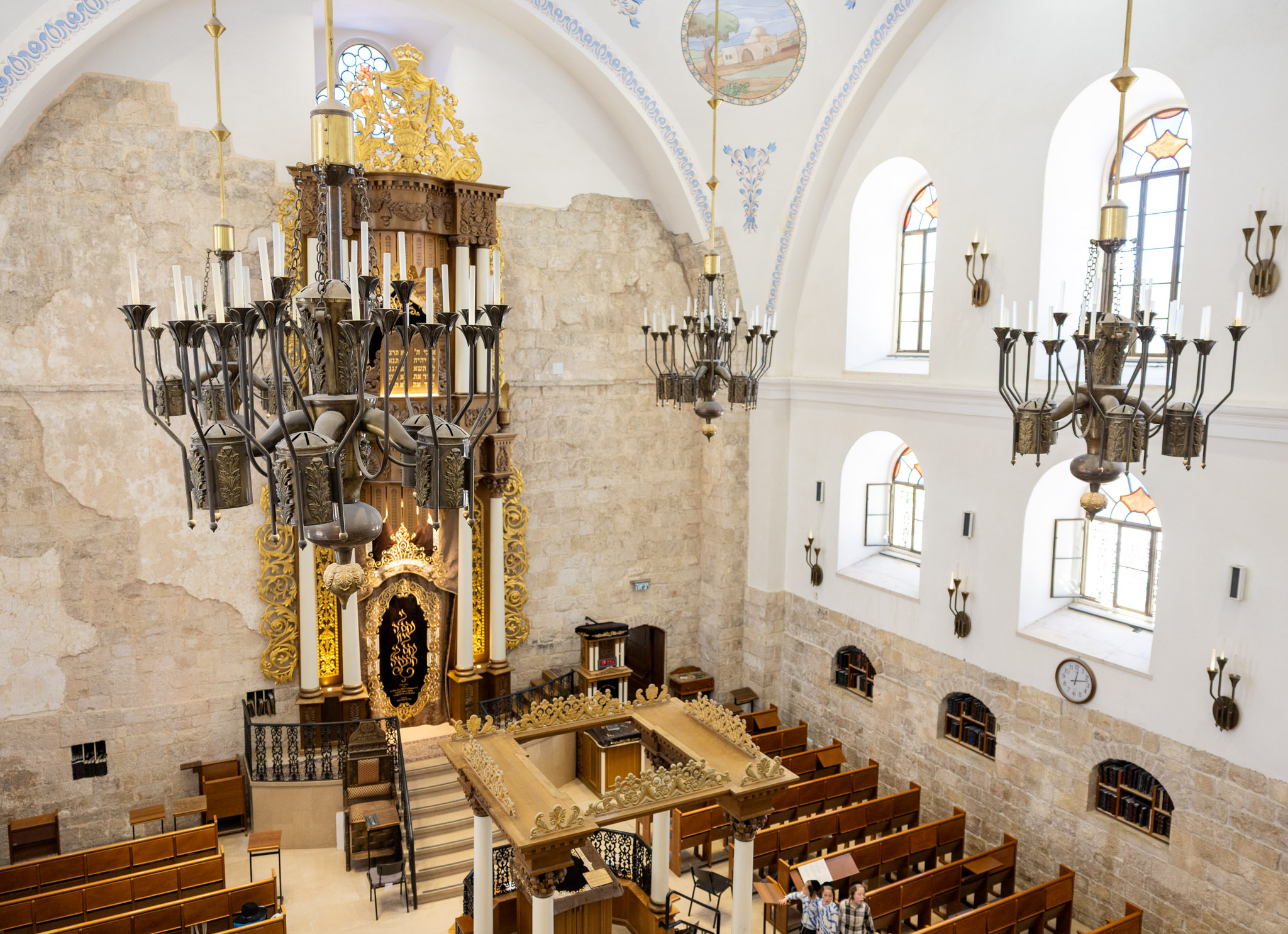
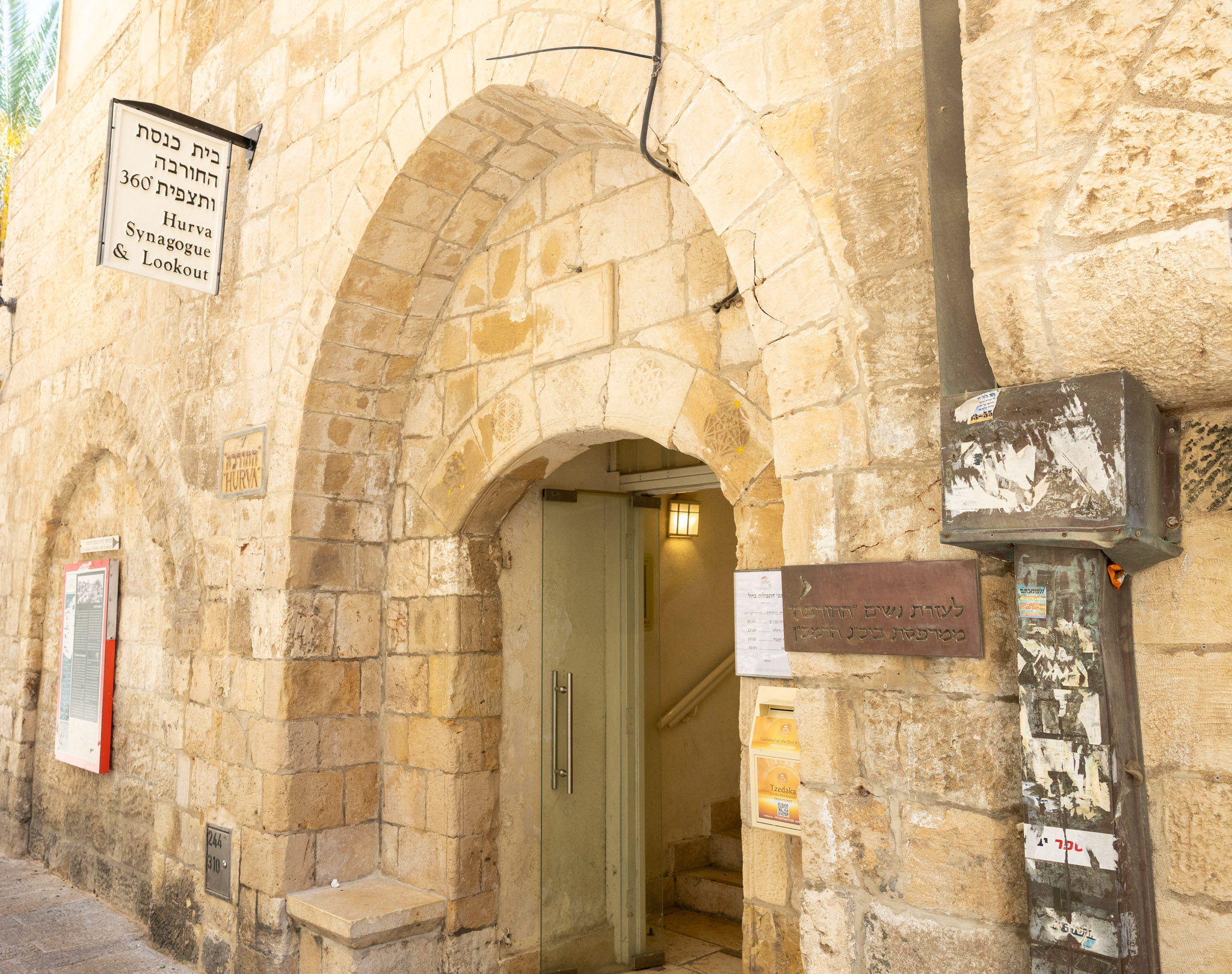
Photo by Dana Bar Siman Tov

a place for prayer

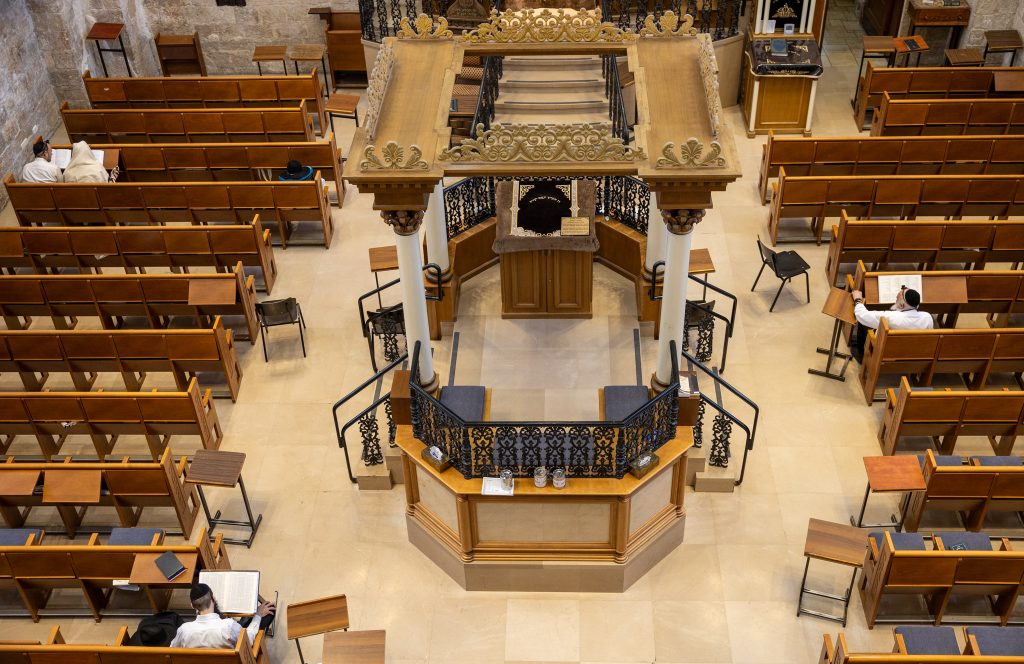
Today the Hurva serves both as an active synagogue and as one of the most recognizable landmarks in the Old City. Daily prayers and holiday services take place beneath its soaring dome, while visitors from around the world come to explore the building and ascend its upper levels for sweeping views of Jerusalem’s rooftops and sacred sites. Its presence anchors the Jewish Quarter, linking contemporary life with the deep historical layers that surround it.

Photo by Dana Bar Siman Tov

a symbol of continuity

Few buildings in Jerusalem illustrate the city’s enduring rhythm of destruction and renewal as clearly as the Hurva. Named for a ruin, it nevertheless stands today as a symbol not of loss but of continuity, its dome rising once again over the Old City as a reminder that in Jerusalem, rebuilding has always been part of the story.

Previous
Next