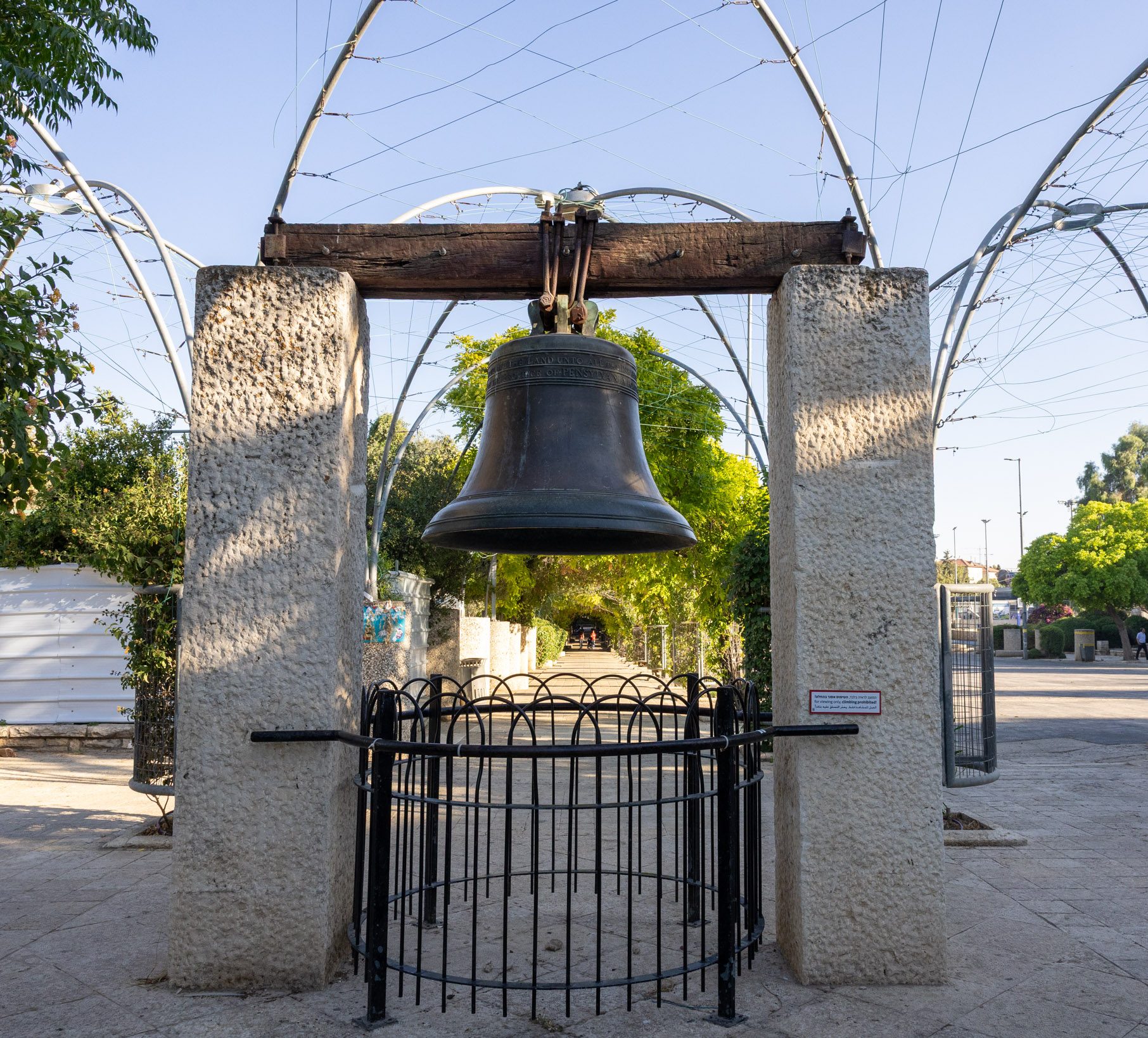
If one hears the name “Liberty Bell Park,” the mind instinctively travels to Philadelphia, home of the famous cracked bell that became a symbol of American independence. It comes as a surprise, then, to find in Jerusalem a vast public garden anchored by a replica of that same bell. Cast as a replica of the famous Liberty Bell in Philadelphia, the bell was installed in 1976 to mark the bicentennial of the United States. Set against Jerusalem’s hills rather than Philadelphia’s historic square, the bell forms the symbolic heart of a park that quietly weaves together local landscape and an unexpected gesture of transatlantic friendship.

a park is born

The story of the park begins several years earlier. In the decades following the establishment of the State of Israel, this valley south of the city center was slated for large-scale development. Plans circulated to build residential towers and commercial structures that would have dramatically altered the open landscape between Talbiya, Yemin Moshe, and the German Colony. Residents of the surrounding neighborhoods strongly opposed these proposals and their efforts ultimately reshaped the future of the site. Instead of dense development, the municipality adopted architect David Kroyanker’s proposal that designated the valley to include parks and open spaces. While most of the valley was preserved as open green space, a small number of structures were permitted along its edges, including the Inbal Hotel. The overall plan favored landscape rather than architecture, creating a park that would remain accessible to the public while maintaining the gentle contours of the valley.

Photo courtesy of Liberty Bell Park

saved by the bell

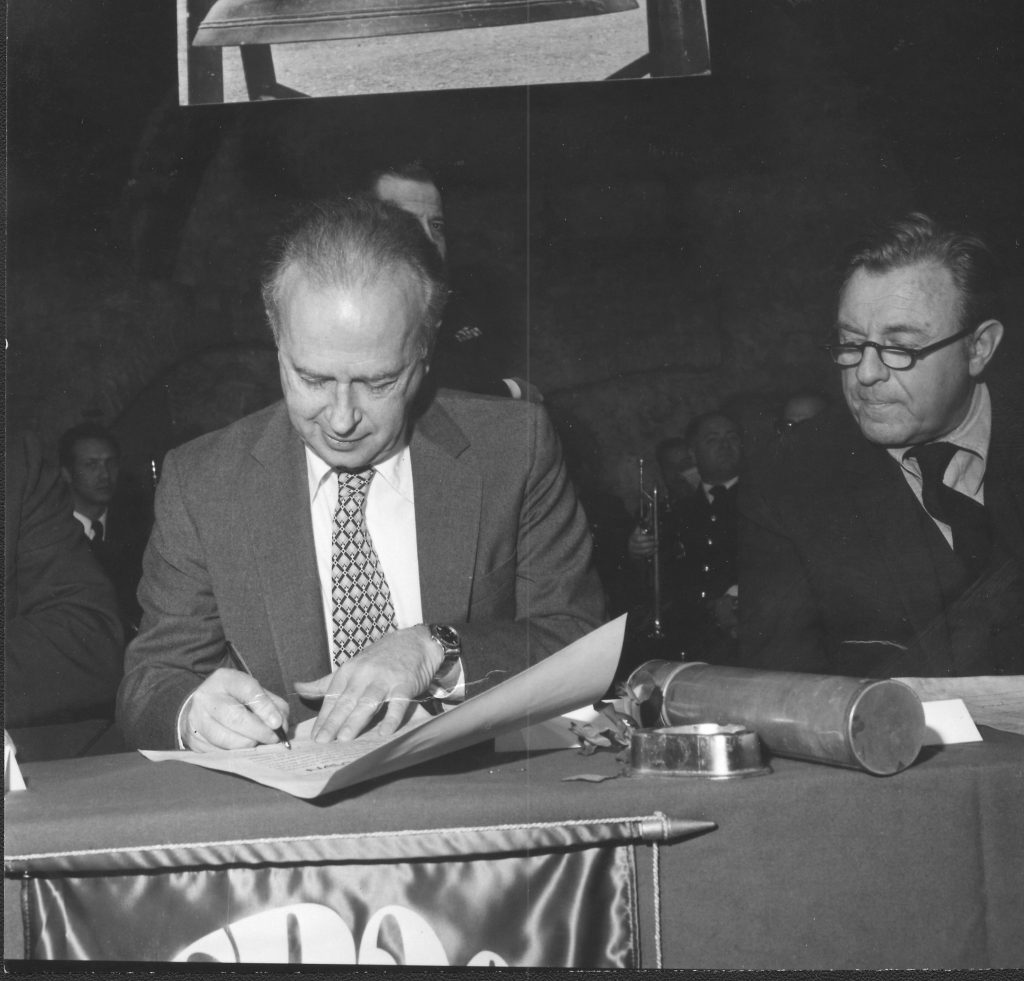
The project took shape during the 1970s, spearheaded by Mayor Teddy Kollek, who wished to commemorate the bicentennial of American independence in a meaningful way. The Liberty Bell monument became the centerpiece of this vision. Kollek envisioned placing an exact replica of the famous bell at the heart of the new park, and it just so happened that Jerusalem already possessed such a bell. It had been presented to Israel in the 1950s by the Philadelphia Jewish Federation and stood somewhat inconspicuously in a small garden near the Knesset. Determined to give the monument a more fitting setting, Kollek requested special permission from the Knesset to relocate it to the new park. His request was granted, and so, with the help of the Jerusalem Foundation and several American donors, the bell was transferred to the valley where it would become the park’s defining landmark.

Teddy Kollek with Yitzhak Rabin, May 1986, at Liberty Bell Park. Photo courtesy of the Jerusalem Foundation Archive

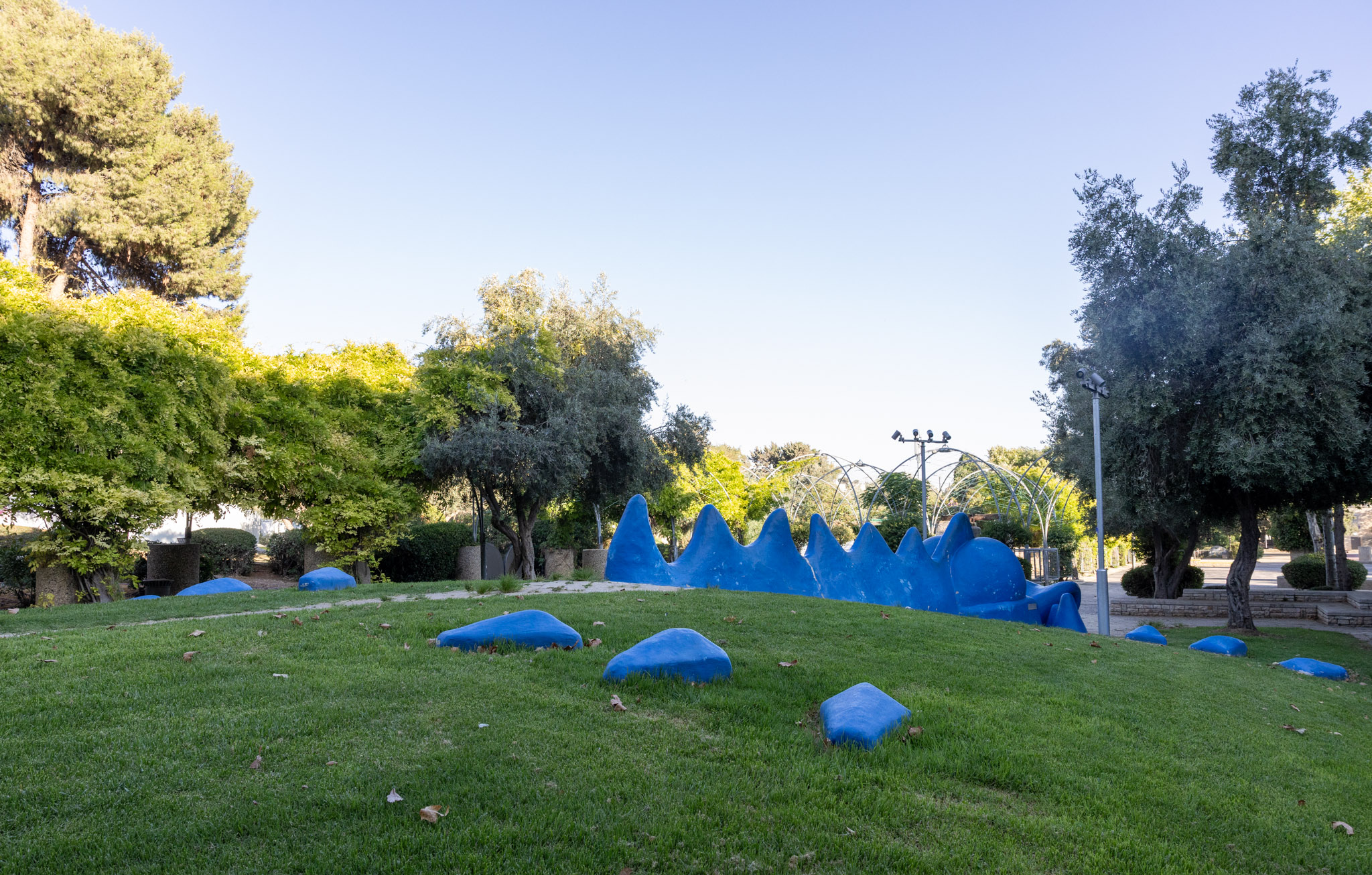
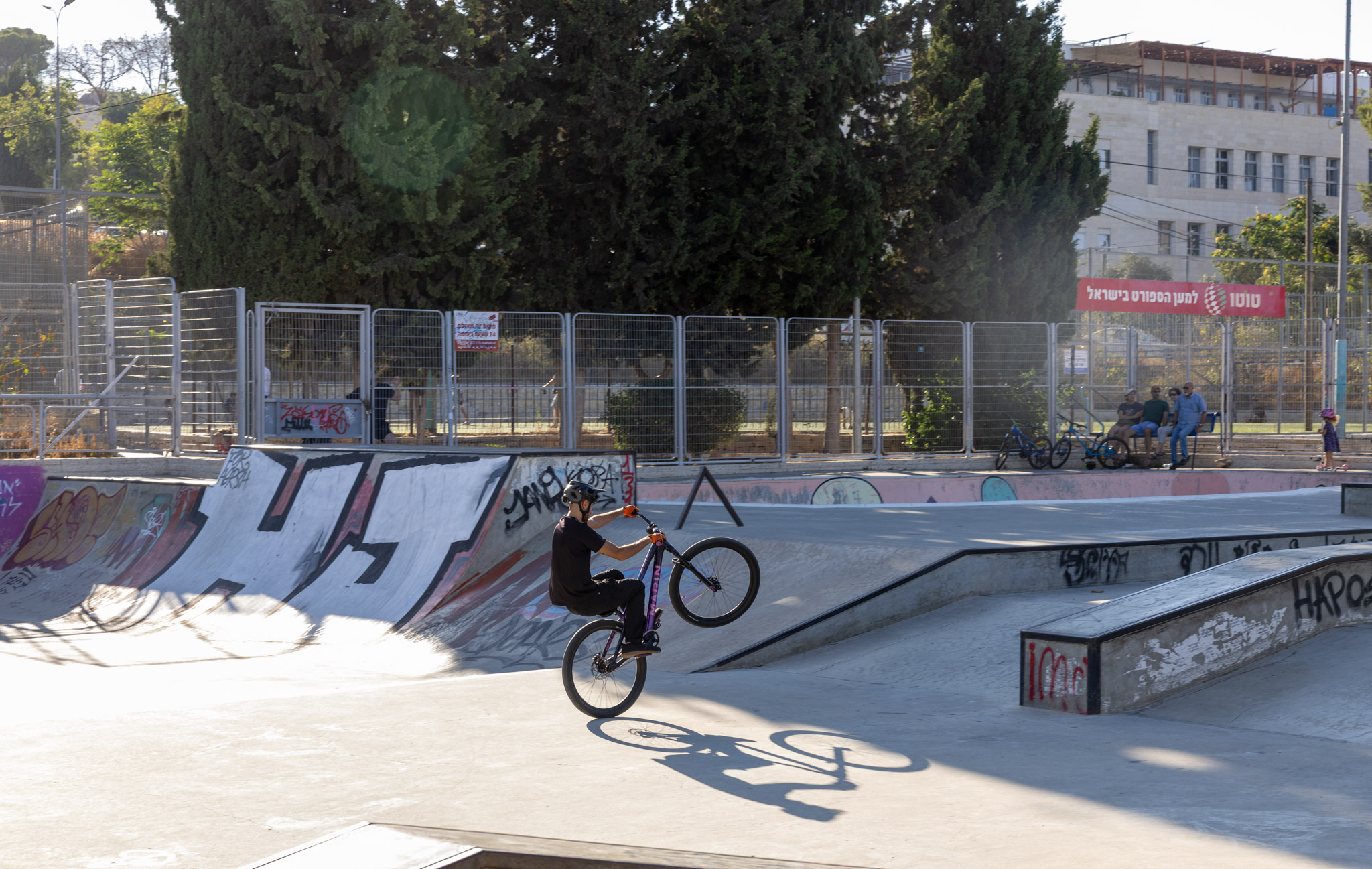
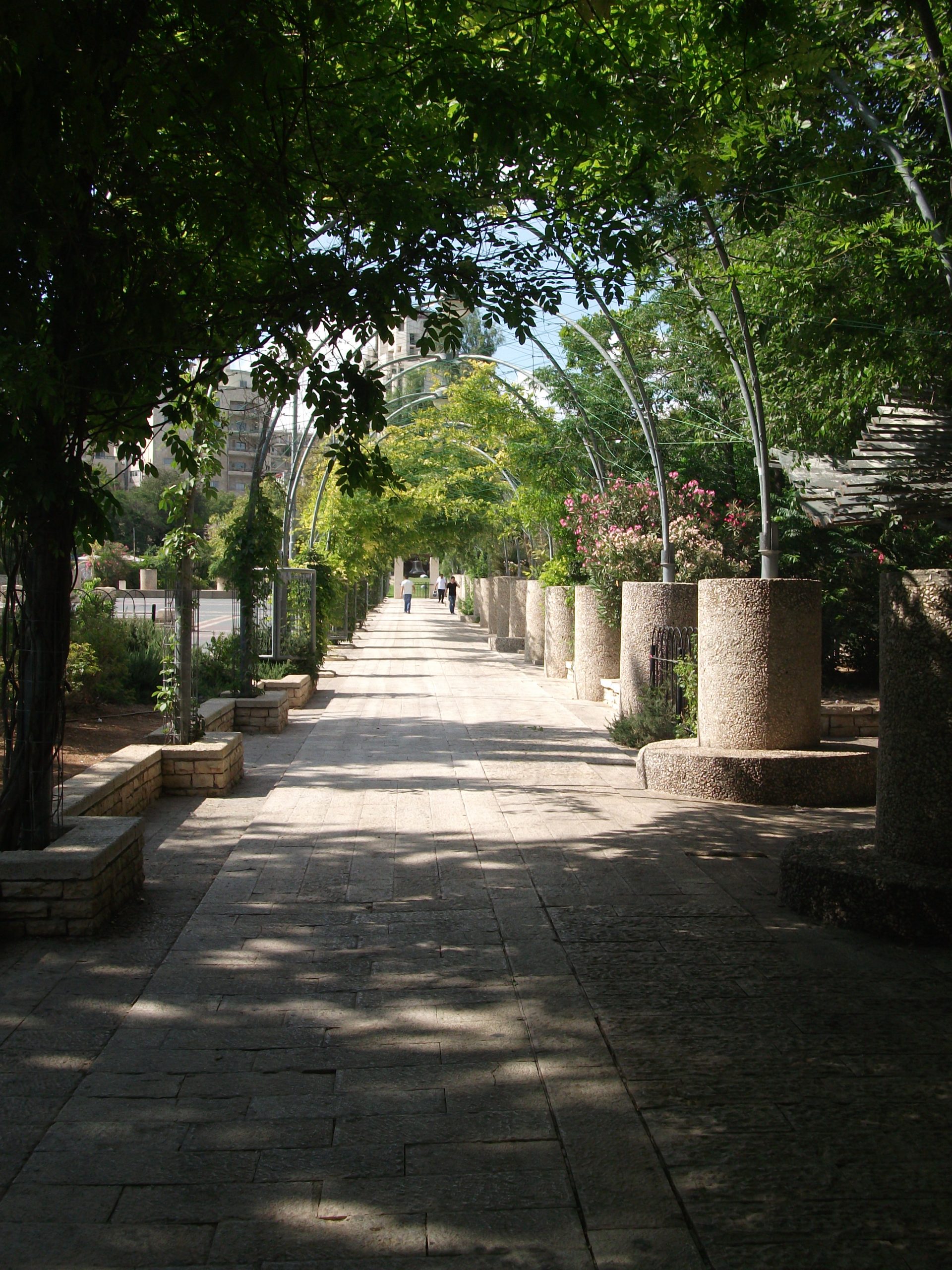
Today Liberty Bell Park stretches across roughly nine acres of lawns, pathways, and shaded corners. Walking through it reveals a surprising variety of spaces. There are playgrounds filled with climbing structures and swings, outdoor exercise equipment scattered among the trees, and a professional skate park, where athletes can test out their skills. At one end of the garden stands the Davidson Train Theater, a beloved puppet theater that has introduced generations of children to the imaginative world of stage storytelling. Winding paths link these elements together, allowing visitors to move easily from open lawns to quieter areas beneath the trees.

Photos by Dana Bar Siman Tov

a shared green space

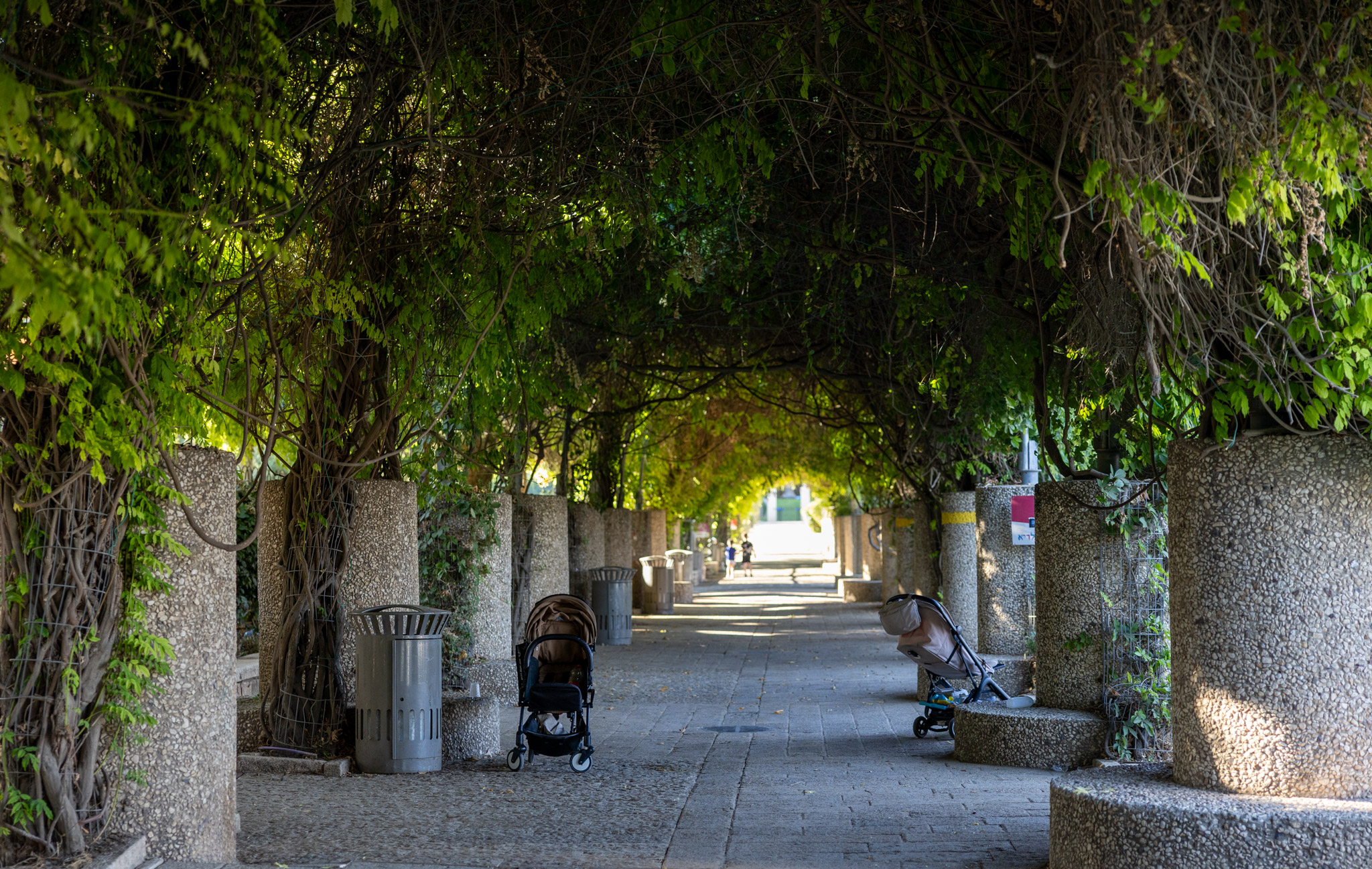
As one of Jerusalem’s most popular parks, Liberty Bell Park draws a steady flow of visitors throughout the day. Joggers weave along the shaded paths while nearby courts fill with basketball and tennis games. Children move between playgrounds and open lawns, and families claim patches of grass for picnics or an easy afternoon outdoors, while dog owners drift toward the fenced dog park. The park functions less as a destination than as a shared backyard for the surrounding neighborhoods, a place where Jerusalemites naturally find their way when they want a little space, movement, or fresh air.

Photo by Dana Bar Siman Tov

the liberty legacy

Nearly fifty years after its inauguration, Liberty Bell Park has become firmly woven into the everyday life of Jerusalem. Its wide lawns preserve a rare openness in a city defined by dense stone neighborhoods and ancient streets. At its center the bell stands quietly, an echo of a distant history that found an unexpected home here. In the end, the park’s meaning lies less in the monument itself than in the life that surrounds it. Beneath Jerusalem’s sky, people gather, rest, play, and move freely through the landscape, giving the idea of liberty a quiet and very human expression.
Previous
Next