introductory paragraph

paragraph title

Jewish tradition closes the Passover Seder with the words, “Next year in the rebuilt Jerusalem.” Few buildings in the city embody that sentiment as vividly as the Hurva Synagogue. Built, destroyed, and rebuilt across centuries, the synagogue has come to symbolize the cycles of loss and renewal that have shaped Jerusalem itself. Standing today in the heart of the Old City’s Jewish Quarter, the Hurva is not merely a synagogue but a structure layered with memory—its very existence the result of repeated efforts to restore what history had undone. With a landmark so closely tied to the city’s history, preservation was never simply a matter of architecture. Restoring the Hurva meant ensuring that a central chapter of Jerusalem’s story would remain visible and accessible, allowing future generations to encounter not only the building itself, but the long history of destruction, perseverance, and rebuilding that it represents.

PARAGRAPH TITLE

Photo by Dana Bar Siman Tov

The story of the Hurva begins in the early eighteenth century, when followers of Rabbi Yehuda Hehassid arrived in Jerusalem in 1700 and began constructing a synagogue on the site. Financial difficulties quickly stalled the project, and in 1721 the unfinished structure was destroyed by creditors. The abandoned site became known simply as “the ruin”—the Hurva—a name that would remain even as new buildings rose in its place.

More than a century later, Jewish communities across Europe and the Middle East raised funds to rebuild the synagogue. Completed in 1864 with the support of the Ottoman Sultan Abdulmecid and designed by the imperial architect Assad Bey, the Hurva became the largest and most prominent synagogue in Jerusalem. Its imposing dome rose above the rooftops of the Old City and became one of the city’s defining landmarks, joining the skyline alongside the domes of the Church of the Holy Sepulchre and the Dome of the Rock. Within the Jewish Quarter, the Hurva functioned not only as a place of prayer but as a central hub of communal and religious life.

Photo by Dana Bar Siman Tov

paragraph title

PARAGRAPH TITLE

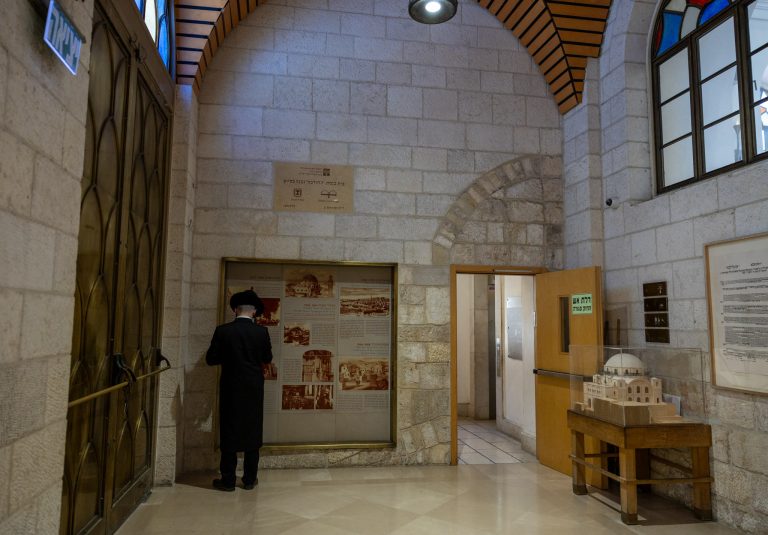
After the Jewish Quarter fell to Jordanian forces, the synagogue was severely damaged by shelling and later demolished, leaving behind little more than rubble. When Israel regained control of the Old City in 1967, the question of what to do with the site became a matter of intense debate. Some proposed leaving the ruins as a memorial to the destruction of the Jewish Quarter, while others envisioned rebuilding the synagogue entirely. The renowned American architect Louis Kahn even produced visionary modern designs for a new Hurva, though they were never realized.

PARAGRAPH TITLE

In the meantime, the site remained largely open. In the late 1970s, with the support of the Jerusalem Foundation, the remains of the synagogue were stabilized and a monumental sixteen-meter stone arch was constructed on the site. The arch evoked the scale of the vanished building and served for decades as a symbolic marker of what once stood there.

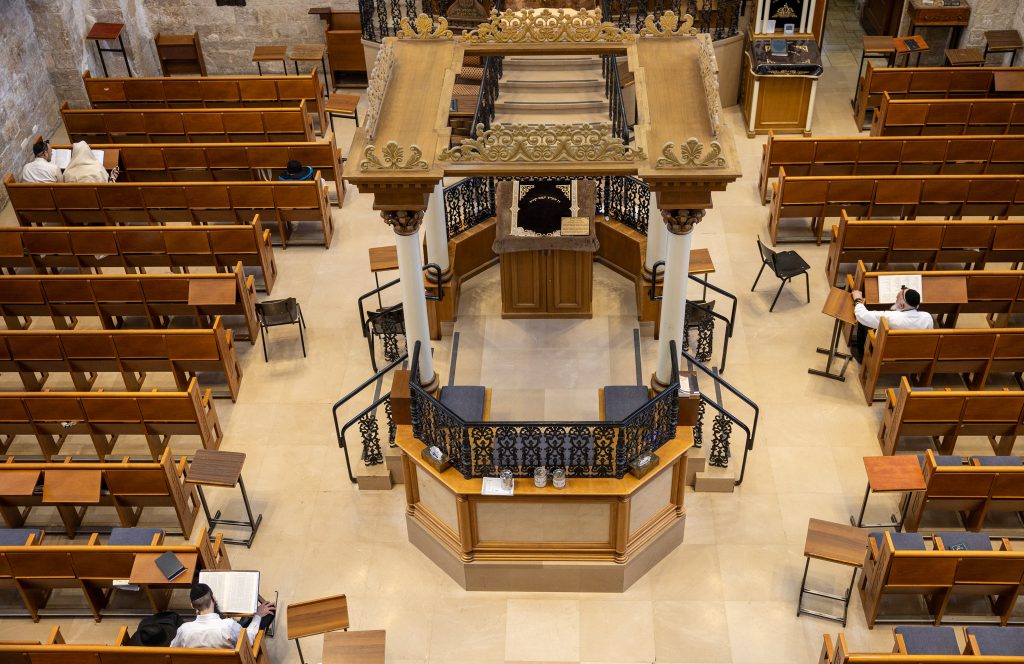
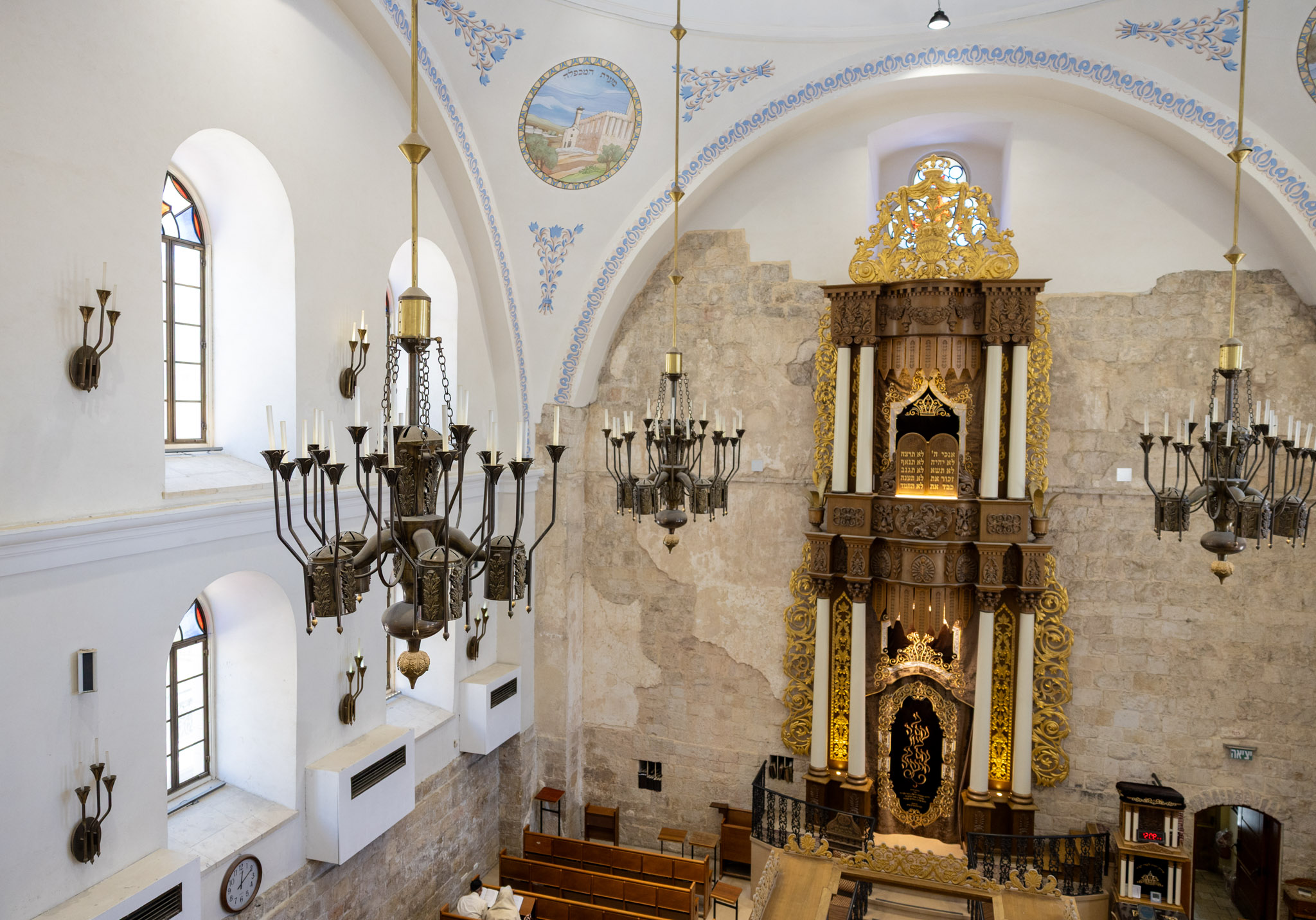
Ultimately, however, the decision was made to reconstruct the synagogue according to its nineteenth-century design. In 2006 the arch was removed and work began to recreate the historic structure. After several years of careful restoration, the Hurva Synagogue reopened in 2010, once again crowned by the large white dome that had once defined the skyline of the Jewish Quarter.
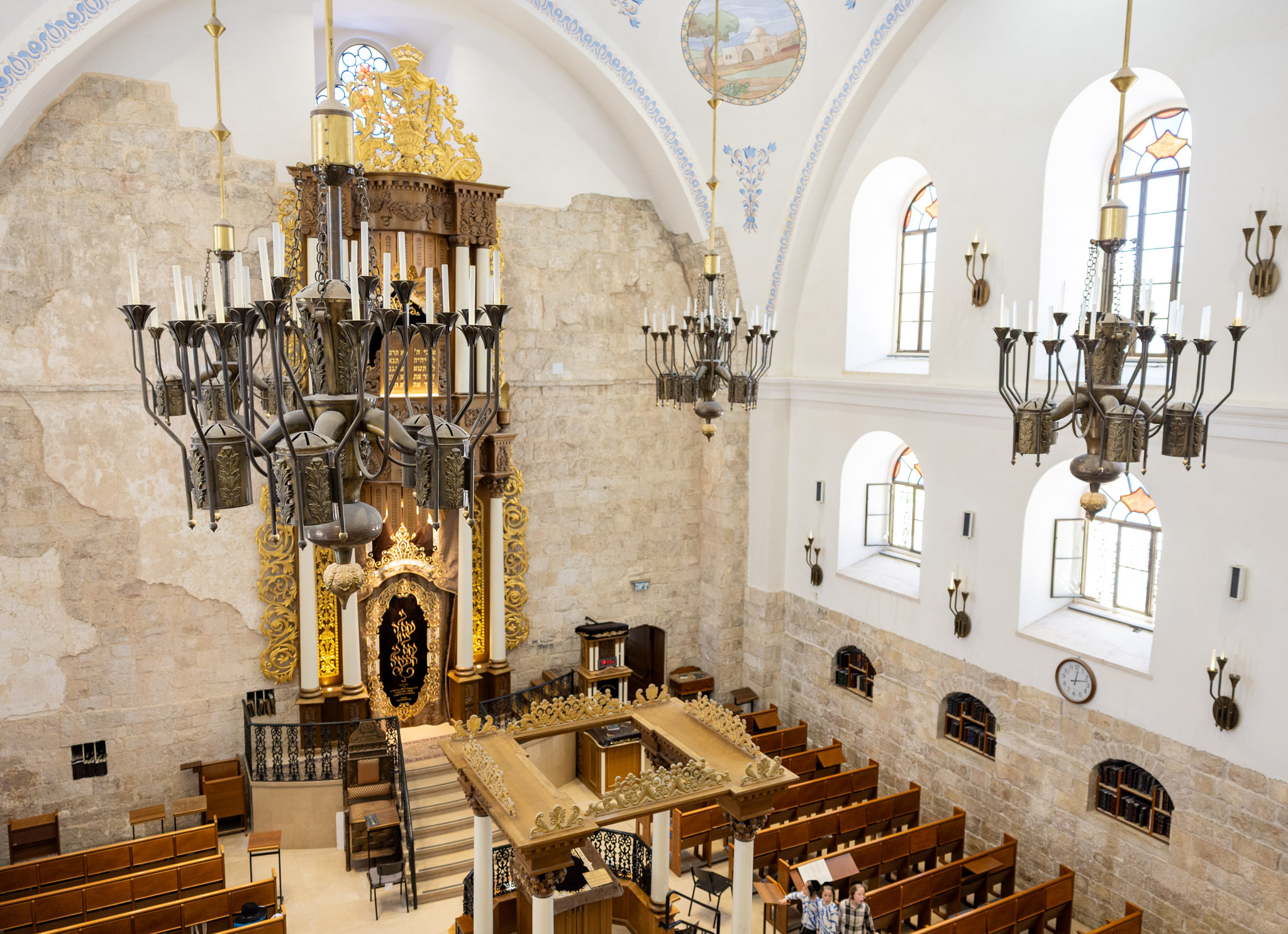
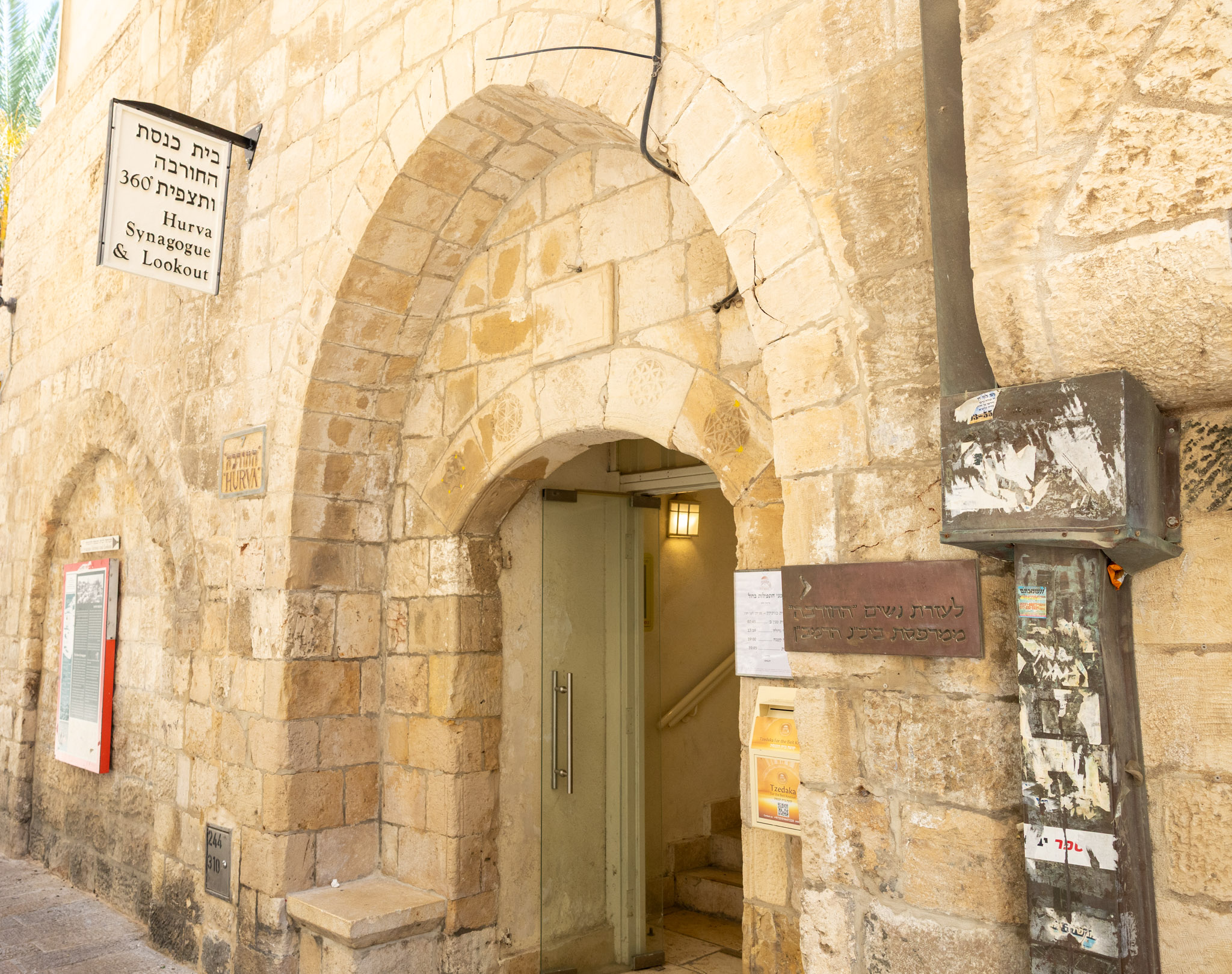
Photo by Dana Bar Siman Tov

PARAGRAPH TITLE

Today the Hurva serves both as an active synagogue and as one of the most recognizable landmarks in the Old City. Daily prayers and holiday services take place beneath its soaring dome, while visitors from around the world come to explore the building and ascend its upper levels for sweeping views of Jerusalem’s rooftops and sacred sites. Its presence anchors the Jewish Quarter, linking contemporary life with the deep historical layers that surround it.

Photo by Dana Bar Siman Tov

PARAGRAPH TITLE

Few buildings in Jerusalem illustrate the city’s enduring rhythm of destruction and renewal as clearly as the Hurva. Named for a ruin, it nevertheless stands today as a symbol not of loss but of continuity, its dome rising once again over the Old City as a reminder that in Jerusalem, rebuilding has always been part of the story.

Previous
Next
The Bastion of Time: A Journey Through Jerusalem at the Tower of David The Khan Theater 28 Community Centers Mitchell Park and Gardens – Hinnom Valley Jerusalem Music Center Mishkenot Natural History Museum Paley Center Hurva Synagogue Jerusalem Print Workshop Wohl Rose Park Artists’ Studios Merrill Hassenfeld Amphitheater, Sultan’s Pool Beit Tamar – Ilan Byer Home for the Aged Jerusalem Botanical Gardens Ein Yael Living Museum Naggar Musrara School of Photography – Art and Society Walter and Elise Haas Promenade and Richard and Rhoda Goldman Promenade The Sam Spiegel Film and Television School Simon Rothschild Ben-Yehuda School for Special Education Teddy Stadium Bloomfield Science Museum Safra Square Modi’in Scouts Club Museum on the Seam Via Dolorosa Restoration and Accessibility Al Jabsha Elderly Center in Christian Quarter The Max Rayne Hand in Hand School for Jewish-Arab Education Israel Asper Community Action Center in Ramot The Kangaroo Family Center Jerusalem Secular Yeshiva Restoration of Montefiore Windmill to working mill Canada House – Morasha Community HaMiffal Israel Gottesman Aquarium Jerusalem Arts Campus Hassenfeld Family Wadi Joz Youth Center Kayma, the George Pinto Jerusalem Doctoral Fellows Culture Series (Sidratarbut) Misgav LeKashish Elderly Day Center Shanti House Well Baby Centers – Renovations Shai Doron Leadership Fellows Beit Hanina Community Center and Pool
Jerusalem Gardens National Park ringing Old City Walls Harry Wilf Independence Park Mishkenot Sha’ananim Cultural Center and Guesthouse Jerusalem Conservatory Hassadna Liberty Bell Park Jerusalem Cinematheque Train Theater The Hattie Friedland School for the Deaf School of Visual Theater The Jacob & Hilda Blaustein Civic Center Beit Sherman – Beit Buria The Djanogly Visual Arts Centre Tisch Family Zoological Gardens Joseph Meyerhoff Youth Center for Advanced Science Studies Jack, Joseph and Morton Mandel Gazelle Valley Urban Wildlife Park Jerusalem Scholarship Fund for Higher Education Jerusalem Resilience Center – Shaare Nefesh
The Bastion of Time: A Journey Through Jerusalem at the Tower of David 1970 Jerusalem Gardens National Park ringing Old City Walls 1970 The Khan Theater 1972 Harry Wilf Independence Park 1972 28 Community Centers 1972 Mitchell Park and Gardens – Hinnom Valley 1973 Mishkenot Sha’ananim Cultural Center and Guesthouse 1973 Jerusalem Music Center Mishkenot 1973 Jerusalem Conservatory Hassadna 1973 Natural History Museum 1976 Paley Center 1977 Hurva Synagogue 1978 Liberty Bell Park 1978 Jerusalem Print Workshop 1978 Wohl Rose Park 1981 Jerusalem Cinematheque 1981 Artists’ Studios 1981 Train Theater 1981 Merrill Hassenfeld Amphitheater, Sultan’s Pool 1981 The Hattie Friedland School for the Deaf 1981 Beit Tamar – Ilan 1982 Byer Home for the Aged 1983 Jerusalem Botanical Gardens 1985 Ein Yael Living Museum 1986 School of Visual Theater 1986 Naggar Musrara School of Photography – Art and Society 1986 Walter and Elise Haas Promenade and Richard and Rhoda Goldman Promenade 1987 The Jacob & Hilda Blaustein Civic Center 1987 The Sam Spiegel Film and Television School 1989 Beit Sherman – Beit Buria 1989 Simon Rothschild Ben-Yehuda School for Special Education 1990 Teddy Stadium 1991 The Djanogly Visual Arts Centre 1991 Bloomfield Science Museum 1992 Safra Square 1993 Tisch Family Zoological Gardens 1993 Modi’in Scouts Club 1997 Museum on the Seam 1999 Via Dolorosa Restoration and Accessibility 2000 Joseph Meyerhoff Youth Center for Advanced Science Studies 2000 Al Jabsha Elderly Center in Christian Quarter 2000 The Max Rayne Hand in Hand School for Jewish-Arab Education 2007 Israel Asper Community Action Center in Ramot 2008 The Kangaroo Family Center 2010 Jerusalem Secular Yeshiva 2011 Restoration of Montefiore Windmill to working mill 2012 Canada House – Morasha Community 2013 HaMiffal 2015 Jack, Joseph and Morton Mandel Gazelle Valley Urban Wildlife Park 2015 Israel Gottesman Aquarium 2017 Jerusalem Scholarship Fund for Higher Education 2017 Jerusalem Arts Campus 2018 Hassenfeld Family Wadi Joz Youth Center 2019 Kayma, the George Pinto Jerusalem Doctoral Fellows 2020 Culture Series (Sidratarbut) 2021 Misgav LeKashish Elderly Day Center 2023 Shanti House 2024 Jerusalem Resilience Center – Shaare Nefesh 2024 Well Baby Centers – Renovations 2024 Shai Doron Leadership Fellows 2025 Beit Hanina Community Center and Pool 2026