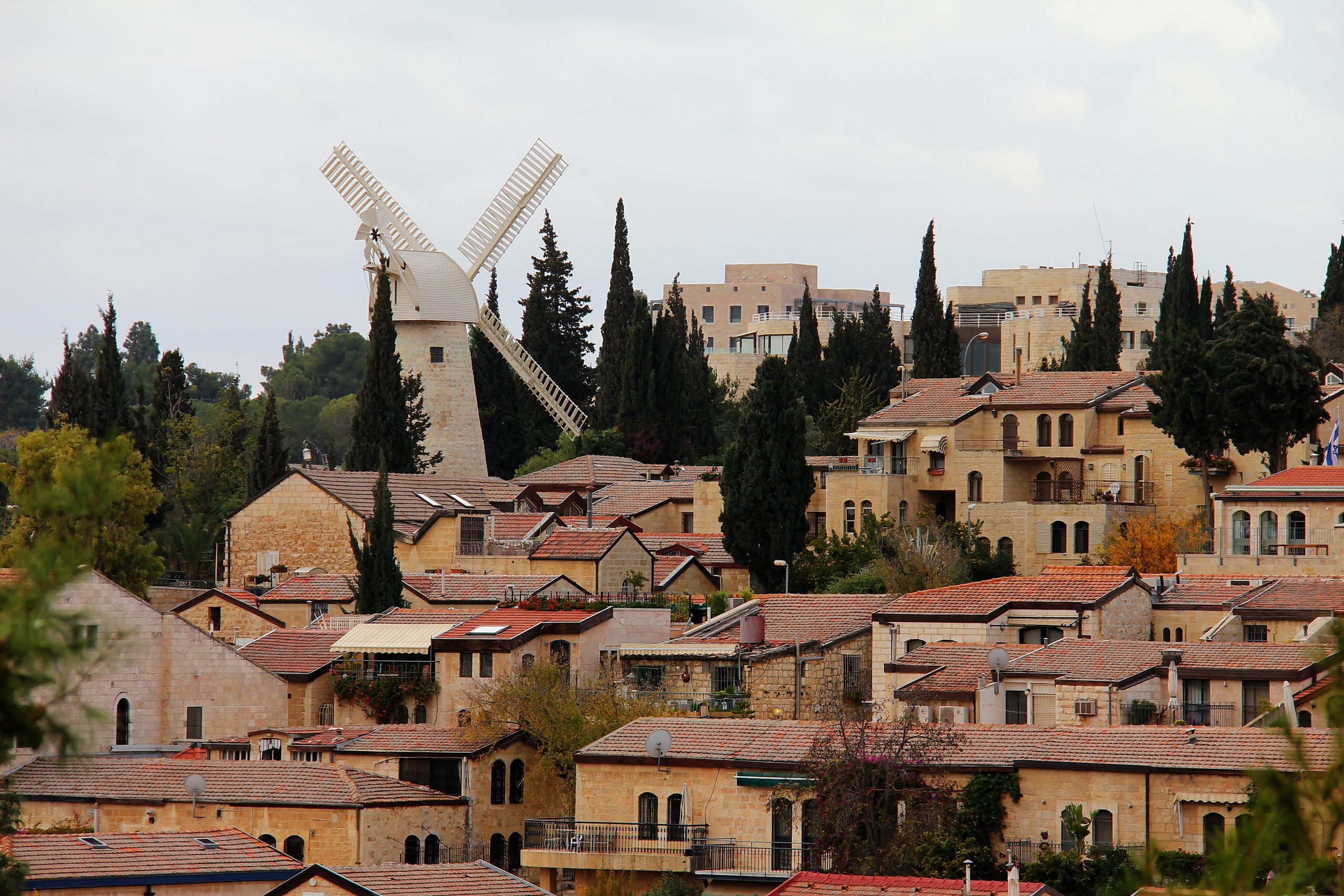
Just beyond the southern edge of the Old City of Jerusalem, a small hill crowned by a white stone tower and wooden blades marks one of the turning points in the city’s modern history. The Montefiore Windmill stands in the neighborhood of Mishkenot Sha’ananim—the first Jewish neighborhood built outside the Old City walls. Together, the windmill and the neighborhood symbolize the moment when Jerusalem began to grow beyond its ancient boundaries.

the montefiore legacy

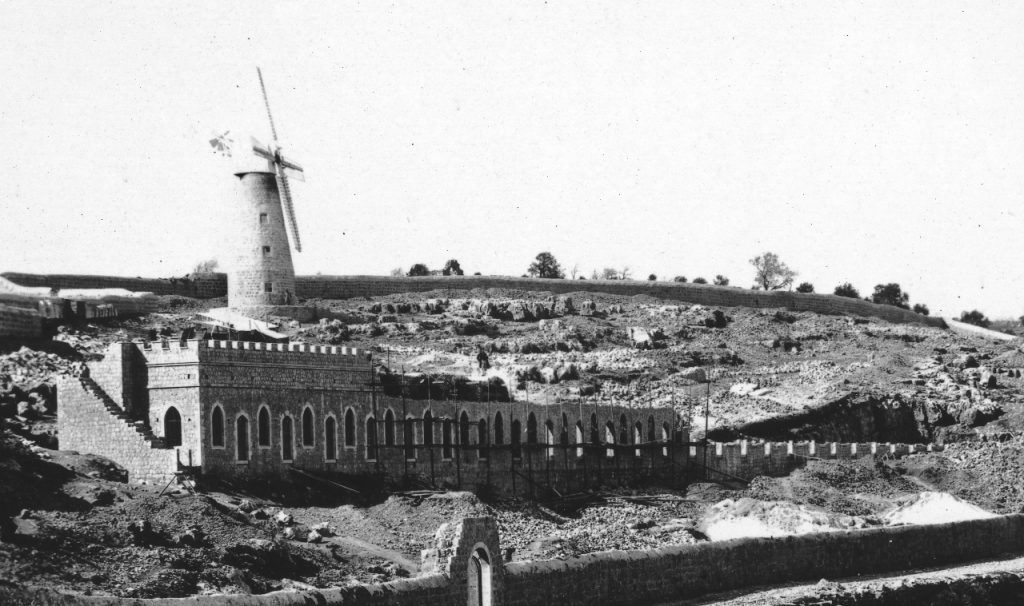
One of the figures most responsible for initiating the shift beyond the walls of the Old City was the British Jewish philanthropist Sir Moses Montefiore. Deeply committed to strengthening Jewish life in the Land of Israel, Montefiore sought to promote industry, education, and improved living conditions while encouraging economic independence for the city’s residents. Acting as executor of the estate of Judah Touro, whose bequest funded much of the project, Montefiore oversaw the construction of Mishkenot Sha’ananim, completed in 1860, offering families the opportunity to live beyond the crowded lanes of the Old City. As part of this vision, he also initiated the construction of an elegant stone windmill between 1857 and 1858 so that residents could grind their own flour locally. At the time, windmills represented a modern and efficient technology widely used throughout Europe, and Montefiore hoped the mill would help establish a modest but meaningful local industry.

Photo courtesy of the Jerusalem Foundation Archive

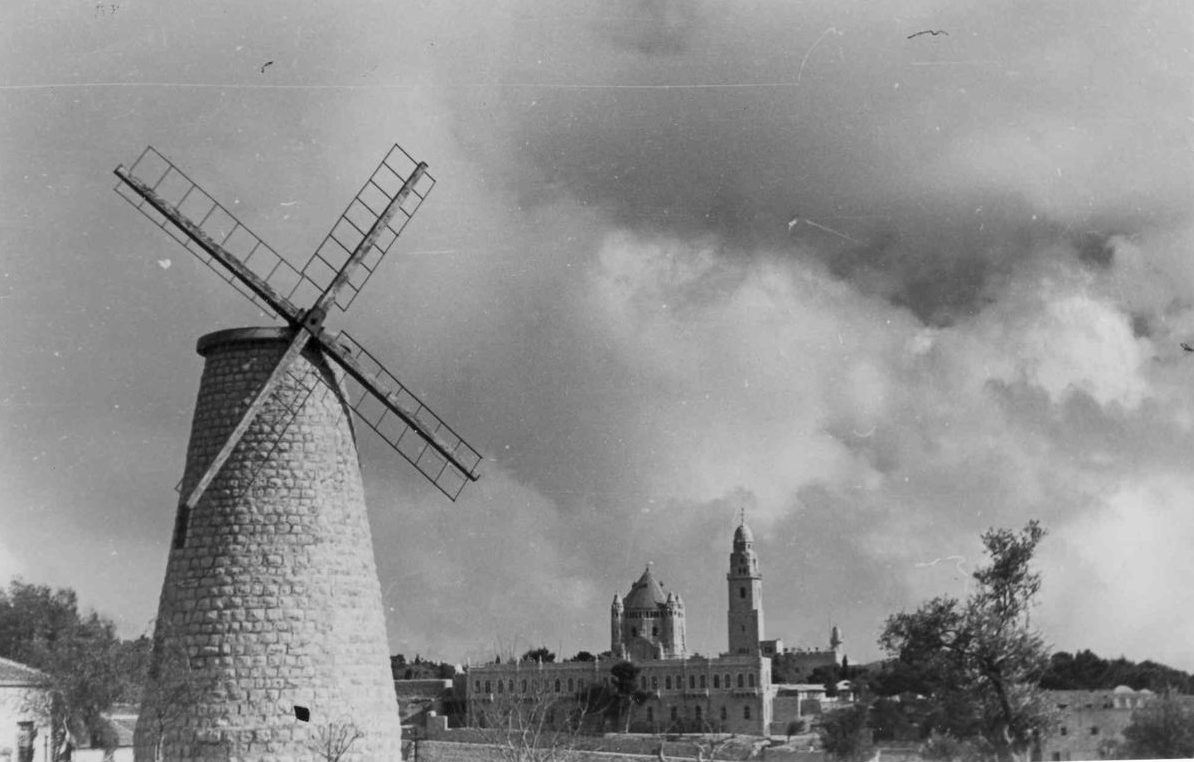
Yet Jerusalem’s climate and topography proved less cooperative than expected. The winds in this part of the city were too weak and inconsistent to power the mechanism reliably. Although the windmill operated for a short period, it never fulfilled the practical role Montefiore had envisioned, and over time the machinery fell silent. Even so, the structure quickly became one of Jerusalem’s most recognizable landmarks. Its tall silhouette marked the edge of the expanding city, standing as a visual reminder of the moment Jerusalem began to grow beyond its ancient walls.

Photo courtesy of the Jerusalem Foundation Archive

The windmill also witnessed some of the city’s most turbulent years. During the 1948 Arab–Israeli War, the hill around it formed part of the frontier between Israeli and Jordanian-controlled Jerusalem. For nearly two decades it stood along this tense boundary, silently observing a landscape marked by fortifications and barbed wire. After the reunification of Jerusalem in the Six-Day War, the windmill gradually returned to its role as a cultural landmark rather than a strategic one. Restoration work soon began, supported by the Jerusalem Foundation together with the municipality. Initial renovations in 1968 were followed by additional repairs in 1976 and 2002, helping stabilize the structure and open it to the public. In 1982 a permanent exhibition on Montefiore’s life and work was installed inside the windmill, transforming it into a small site of historical interpretation.

a cultural landmark


historic restoration

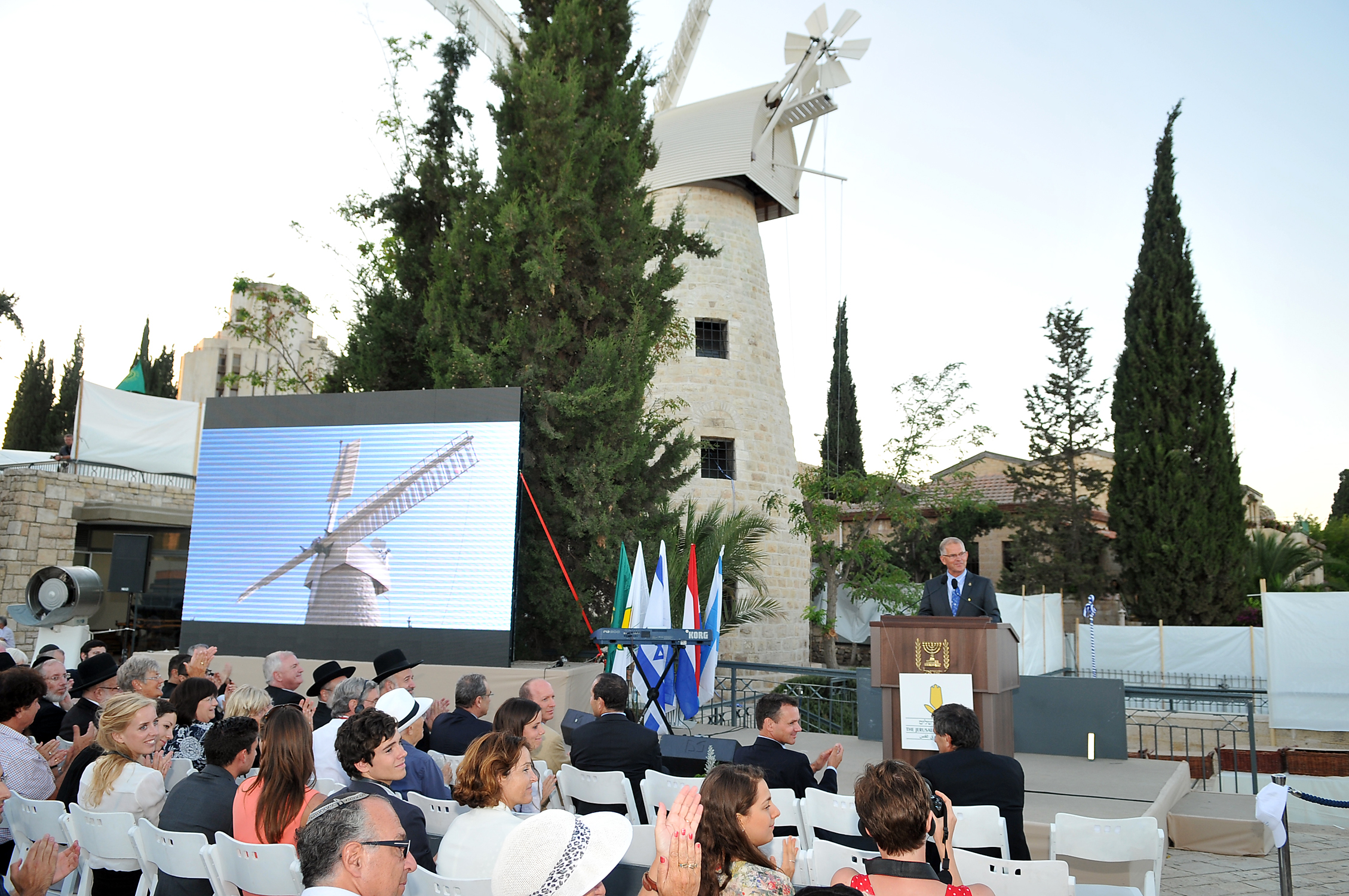
Montefiore Windmill dedication post-restoration, 2018. Photo courtesy of the Jerusalem Foundation Archive


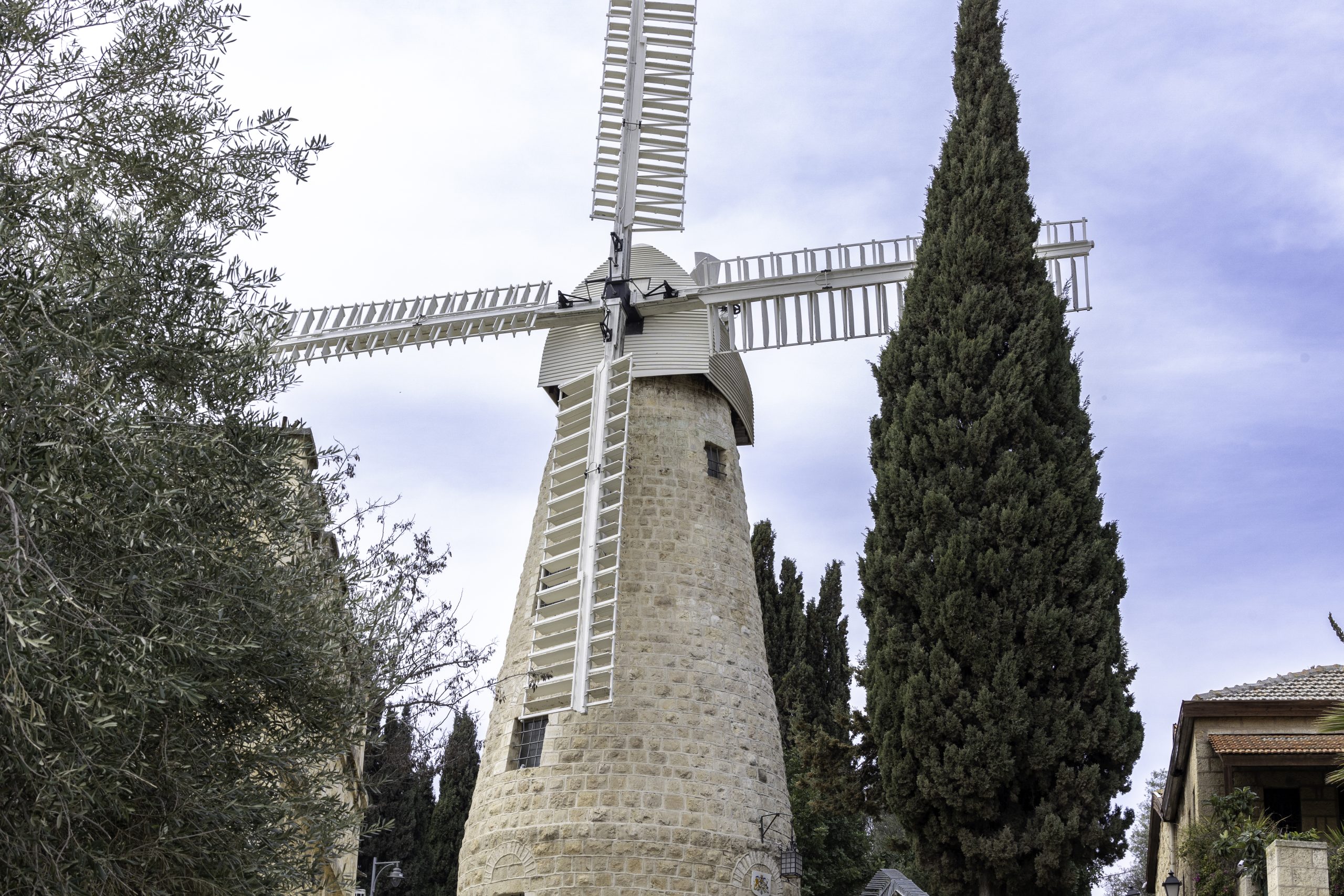
The most significant restoration came in 2012, when the windmill underwent a comprehensive renovation initiated and carried out by the Jerusalem Foundation and supported by Christians for Israel Holland, alongside the Prime Minister’s Office, the Israeli Ministry of Tourism, and the Jerusalem Municipality. Specialists carefully restored the milling mechanisms, reconstructed the rotating wooden blades, and returned the structure to the appearance it would have had in the 19th century.

For the first time in more than a century, the windmill was once again capable of grinding flour. The restoration returned the structure not only to its historic form but also to its original purpose. Bags of flour have since been milled on site—a small but meaningful gesture that reconnects the landmark with Montefiore’s vision of a self-sustaining Jerusalem.
the spirit of renewal

Photo courtesy of the Jerusalem Foundation Archive

Today, more than 150 years after its construction, the windmill remains one of the city’s most beloved landmarks. Its restored blades turn above the gardens and stone paths of Mishkenot Sha’ananim, offering Jerusalemites and visitors alike a glimpse of the city’s first steps into modern life. Both monument and functioning mill, it stands as a tribute to Montefiore’s enduring legacy and to the spirit of renewal that continues to shape Jerusalem.

Previous
Next