What happens when anarchic artists meet the establishment? HaMiffal, known simply as “the Factory,” offers one answer: a space where creative freedom is not tamed, but given structure enough to endure. In a city defined by layers of history, belief, and identity, artists play a vital role in keeping culture alive and responsive. They challenge conventions, stretch the imagination, and translate the textures of daily life into forms that are at once personal and shared. Yet for many, especially those working at the margins, finding a home for that work is no simple matter.

a center for the arts

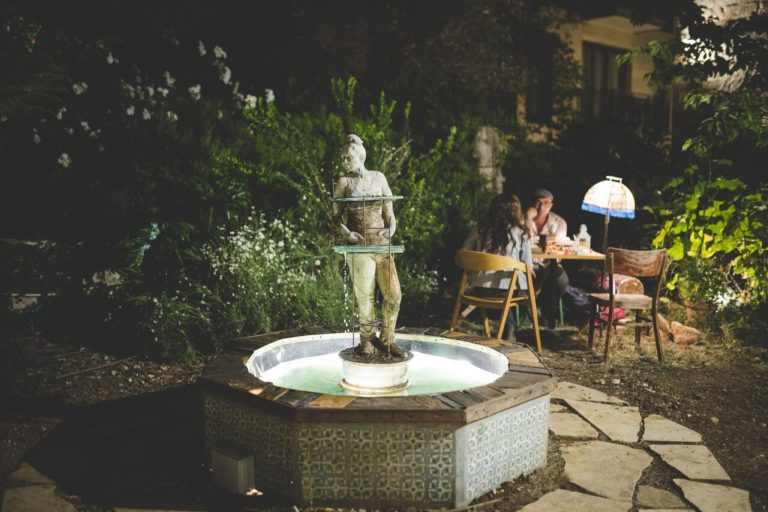
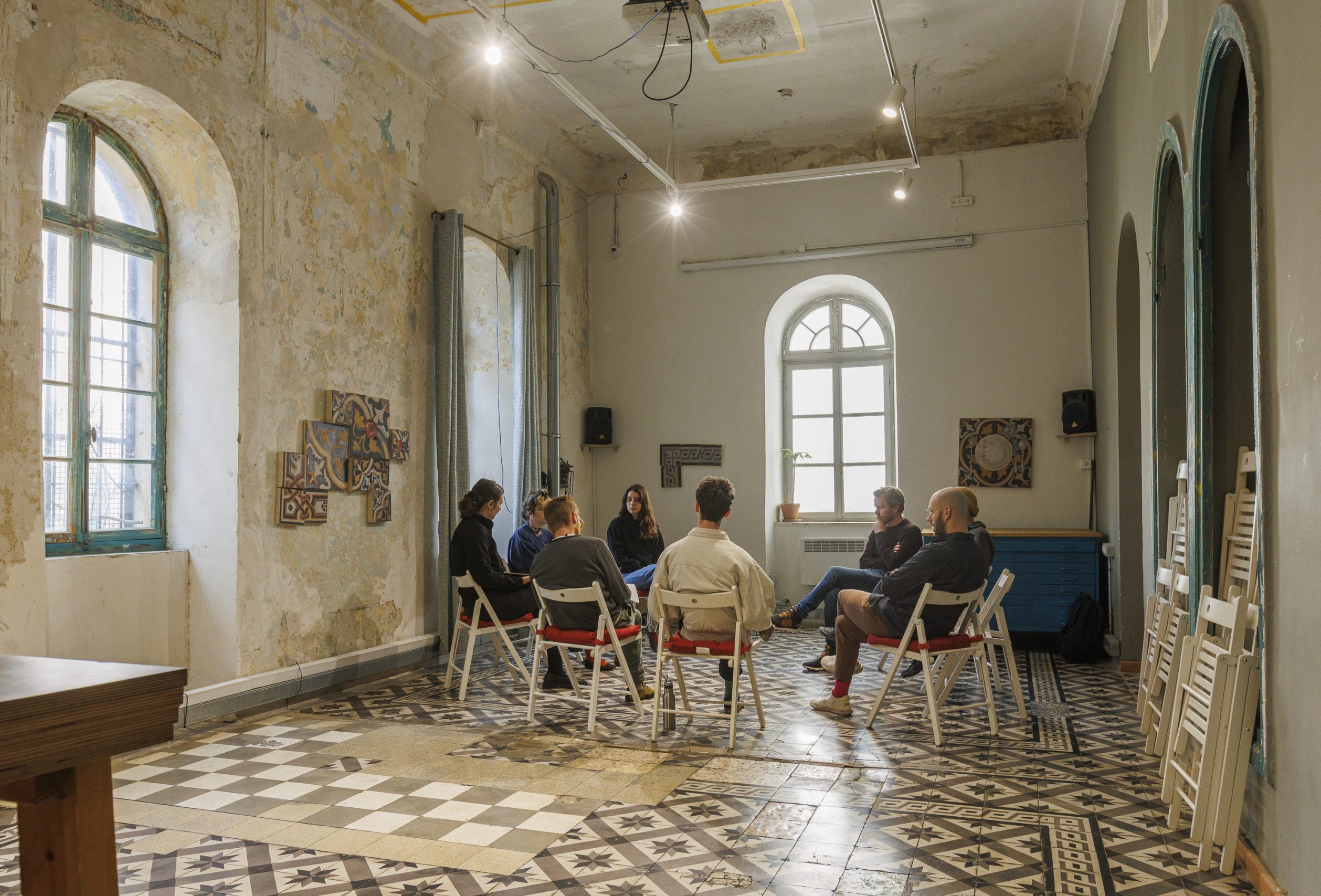
HaMiffal was created to meet that need. Tucked within a late nineteenth-century building, it is less a traditional arts center than a living canvas. From the moment one passes through its entrance arch and into the garden, art spills into every corner. Paint layers remain partially exposed, revealing fragments of decoration from previous eras alongside contemporary additions. Floors, ceilings, stairwells, even the most utilitarian spaces become sites of expression. The building has not been restored in the conventional sense. Instead, it has been allowed to accumulate meaning. The result is a place that feels in constant motion, self-renewing, never fully complete.

Photo by Yuval Urbach

Built at the end of the nineteenth century as the home of the Serafin-Lorenzo family, part of Jerusalem’s Christian Arab community, it later passed through a series of uses following 1948, including decades as a school. After standing empty for ten years, it was reimagined in 2016, when the Jerusalem Municipality invited an artists’ collective to inhabit and activate the space. Led by cultural entrepreneur and curator Neta Meisels, the initiative sought not only to preserve the building, but to transform it into a working environment for artists. Since then, HaMiffal has evolved into a central node in the city’s cultural landscape, managed today by a nonprofit framework that balances professional infrastructure with an open, experimental ethos.

HaMiffal sees itself as a production line for artists, a place where ideas can be developed, tested, and shared. The center offers residency programs, shared studios, and workshops that support both emerging and established creators. Graduates of Bezalel Academy of Arts and Design, among others, find here a space not only to create but to learn how to sustain a practice, including how to present and market their work. Alongside this, HaMiffal hosts exhibitions, installations, performances, and courses in disciplines ranging from photography and drawing to ceramics. Its café and shop extend the experience into everyday life, allowing visitors to engage with art in informal, accessible ways.
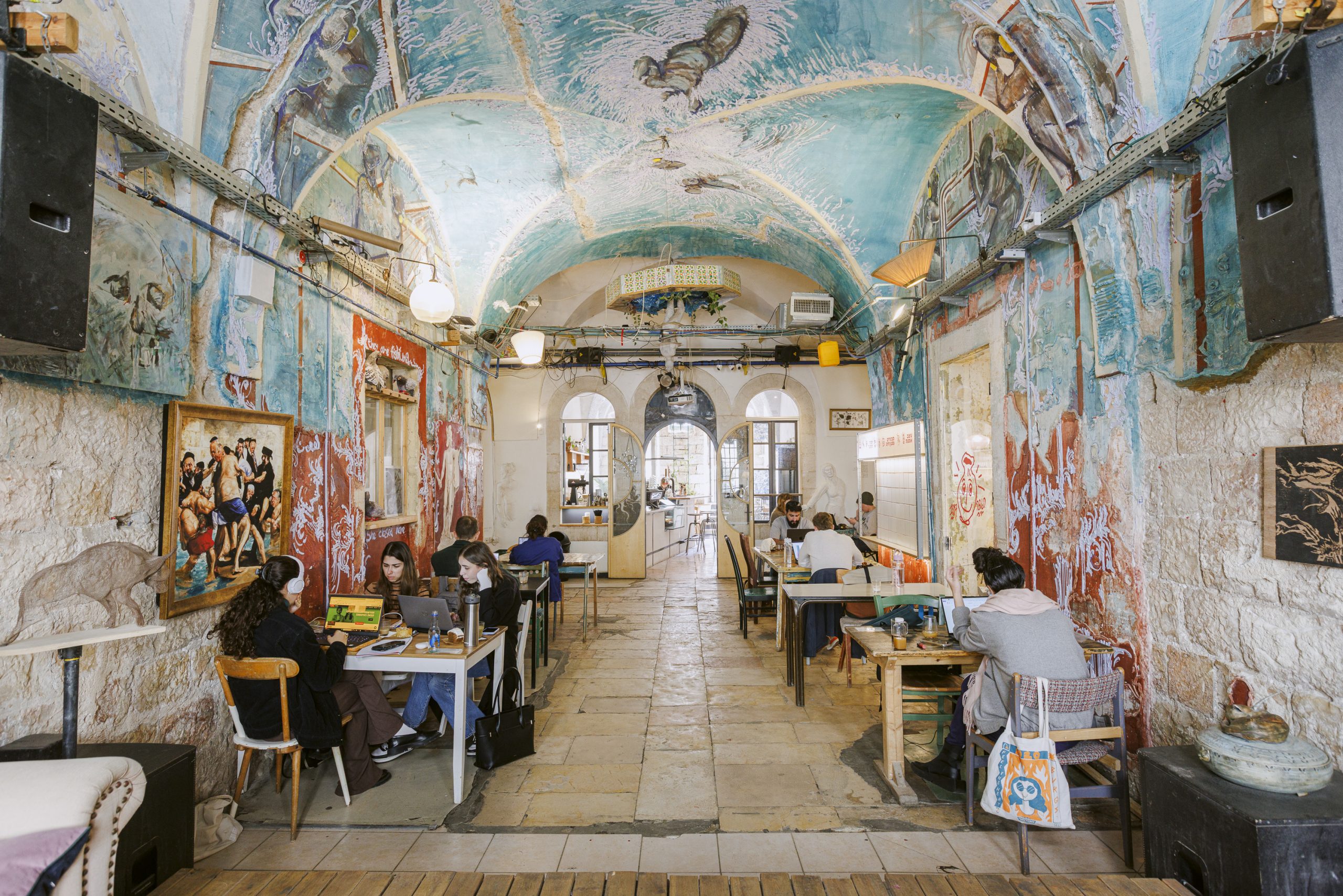
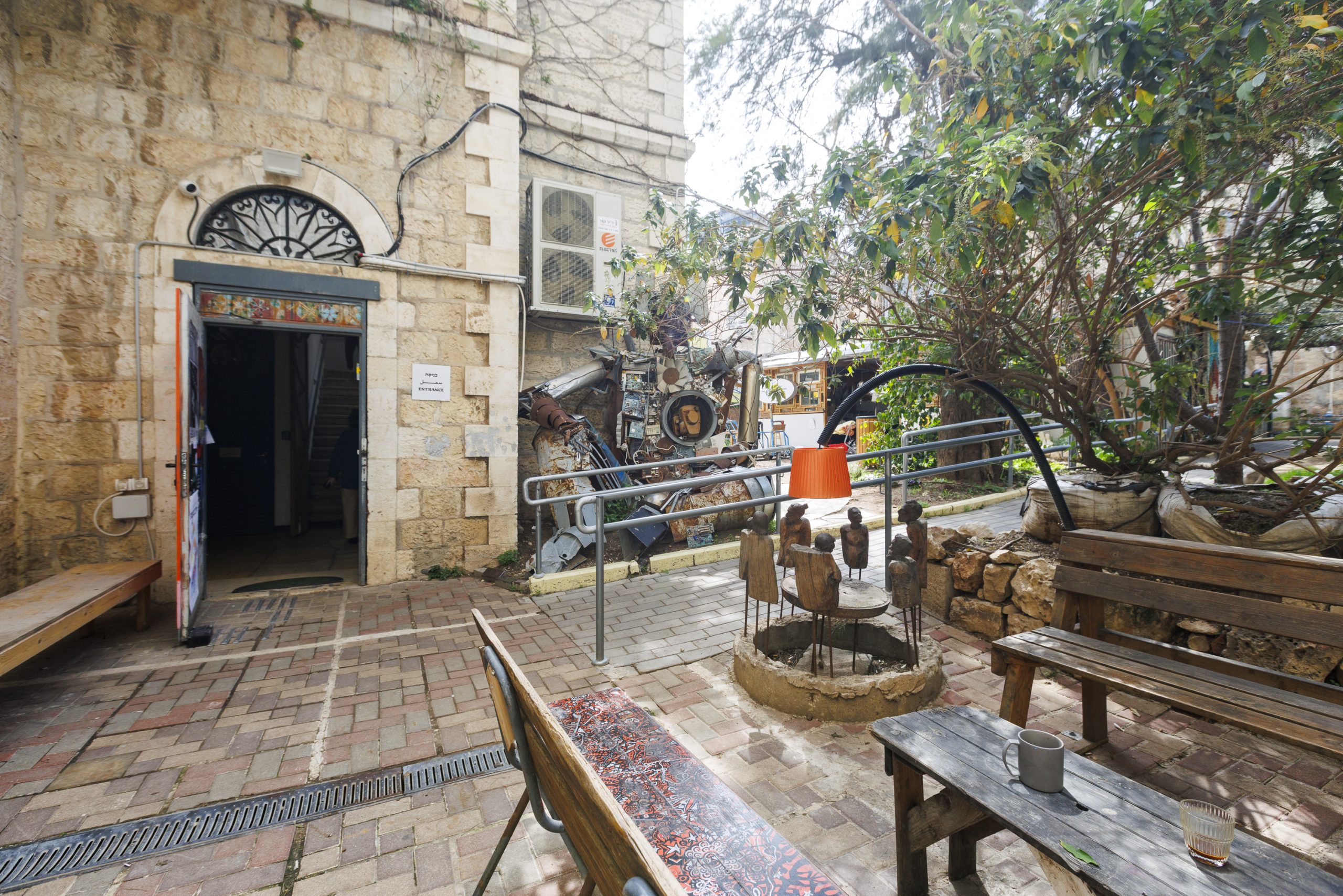
Photo by Yuval Urbach

by artists for artists

Equally important is its commitment to openness. Programming takes place in both Hebrew and Arabic, and includes language exchanges and collaborative initiatives that bring together diverse communities. Recent efforts have extended beyond the building itself, including workshops designed to support artists in East Jerusalem in developing cultural activity within their own neighborhoods. On any given day, hundreds of visitors pass through, some to see an exhibition, others simply to sit, talk, or work within its layered spaces.

a living creative outlet

With the support of the Jerusalem Foundation, HaMiffal has been able to host exhibitions and installations that give local artists visibility and room to take risks. At HaMiffal, every artist who works there leaves something behind, a trace, a gesture, a new layer. The space keeps changing, not dramatically, but constantly. That is what gives it energy. For artists, it offers room to experiment without needing to fit a mold. For the city, it brings something harder to define but easy to feel, a sense that culture is still being shaped in real time and a place where creativity has room to flourish.

Photo by Yuval Urbach
Previous
Next