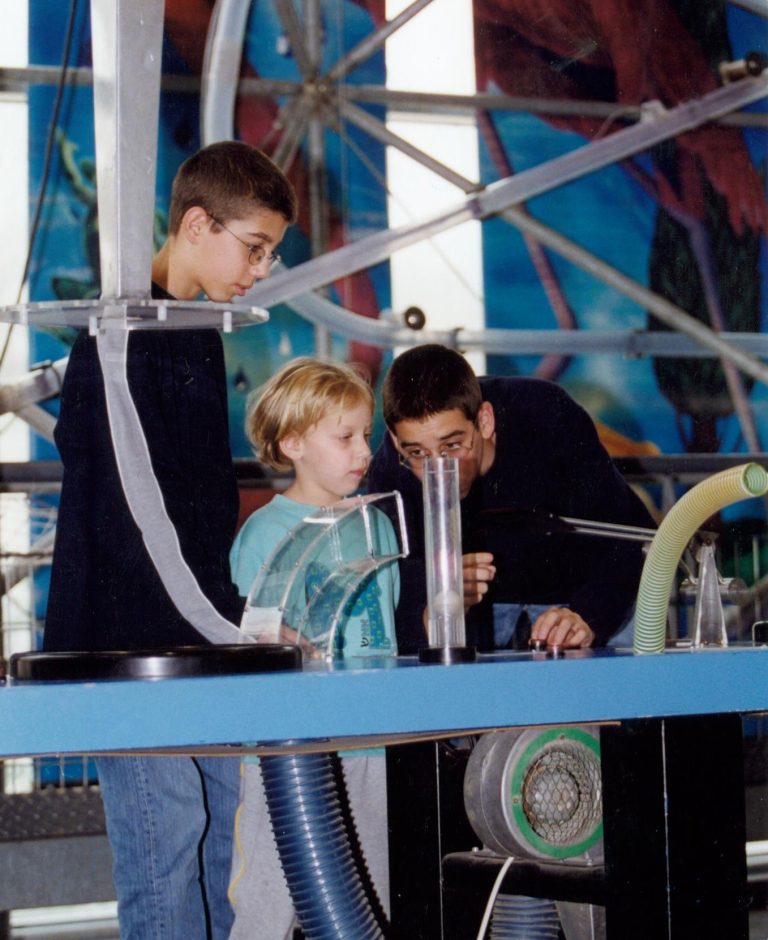
How does one truly understand gravity without watching motion unfold before their eyes? Can one learn about water without watching its flow through channels and currents? And how might the mysteries of light reveal themselves without bending through prisms or scattering across a darkened room. At the Bernard M. Bloomfield Science Museum in Jerusalem, these questions lie at the heart of the institution, shaping a place where scientific ideas come alive through experience rather than explanation alone. Visitors set pendulums in motion, redirect streams of water, experiment with light and shadow, and discover the quiet logic of gears and levers. These moments of interaction form the foundation of Israel’s first interactive science museum, a place built on the belief that scientific understanding begins with curiosity and grows through exploration.

everyday science

Founded in 1992, as a joint project of the Jerusalem Foundation and Hebrew University, with the support of the Bloomfield Family, the Bloomfield Science Museum was Israel’s first interactive science museum. It emerged as part of a broader vision to create a center for youth education in science beside the Hebrew University’s Givat Ram campus. The museum formed one component of the Youth Science Complex developed with the support of the Jerusalem Foundation and the university, alongside the Joseph Meyerhoff Youth Center for Advanced Studies, the Belmonte Science Laboratories Center, and the Beit Bretter Youth Hostel. Originally conceived as the Open Eye Center, the project gradually evolved into a fully realized museum dedicated to bringing scientific thinking into the everyday lives of young people.

Photo courtesy of the Bloomfield Science Museum

From the beginning the museum was designed as an open and dynamic environment rather than a traditional gallery of objects behind glass. Its original building, supported by the Jerusalem Foundation, included large exhibition halls, workshops, activity rooms, and a science garden that encouraged visitors to explore natural phenomena outdoors. Over time the museum continued to expand. In 2001 the Discovery Center was added, doubling the public space and introducing new facilities that included the Henry J. Leir Auditorium, Hirschel Hall, laboratories, workshops, and a professional resource center for educators. A year later the Gideon Rafael Toddlers’ Sand Play Area opened, inviting even the youngest visitors to encounter scientific curiosity through tactile play and imaginative exploration.
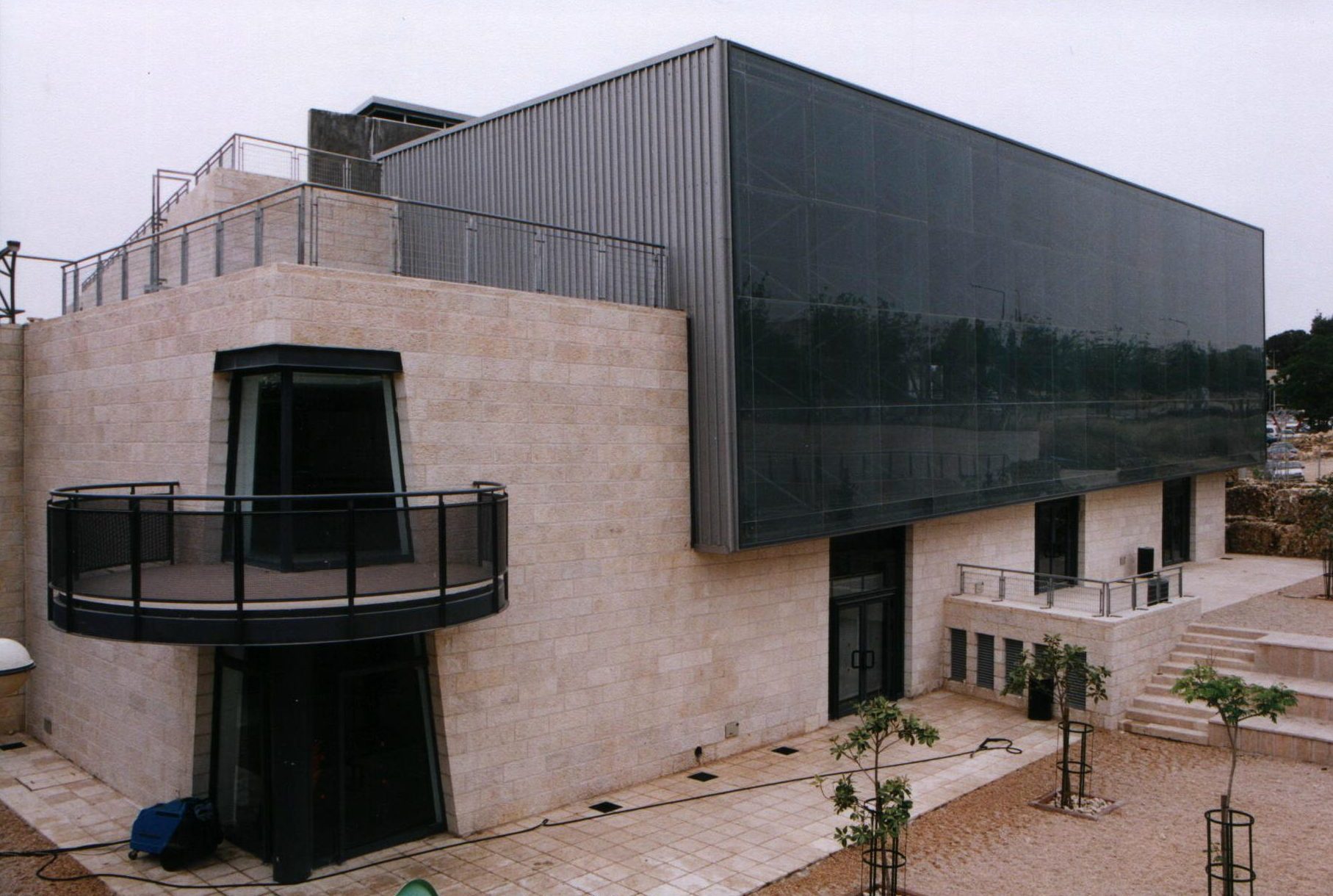
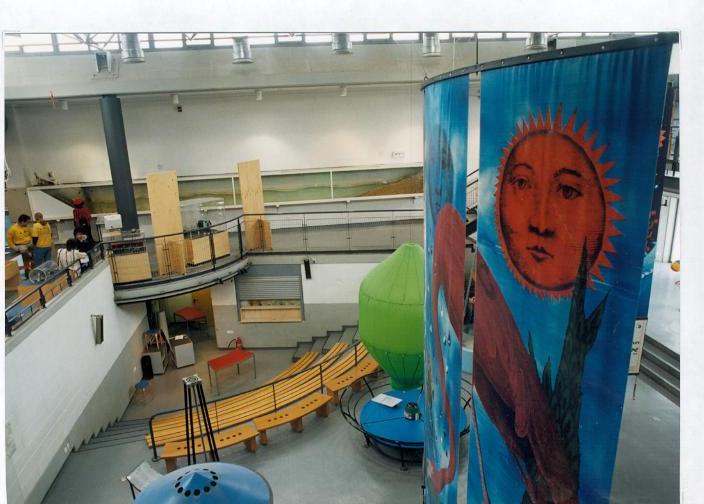
Since opening its doors in 1992, the Bloomfield Science Museum has welcomed more than seven million visitors, with nearly two hundred thousand people passing through its galleries each year. For visitors to the museum, scientific principles are not presented as distant theories but are translated into experiences that invite them to experiment, test ideas, and observe the results for themselves. 

Photo courtesy of the Bloomfield Science Museum

the scientific experience

a shared language

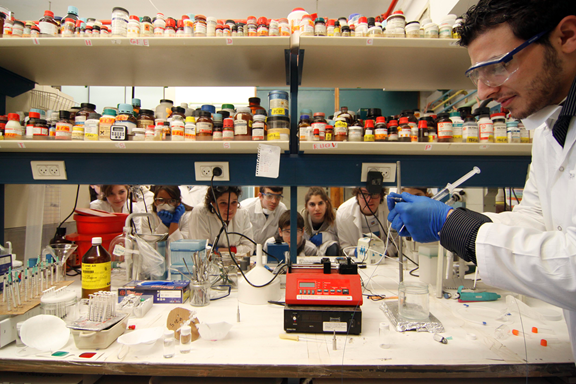
Beyond the exhibition halls, the museum’s educational programs extend this spirit of discovery to thousands of children each year. With the support of the Jerusalem Foundation, museum guides and educational programming were developed in Arabic and Yiddish to provide for all audiences in the city, with visits made possible for children from underprivileged families and for those in special education frameworks. Jewish and Arab students take part together in summer science camps, while preschool enrichment programs bring young children from East Jerusalem into the museum for their first encounters with scientific exploration. Projects such as the Peace Labyrinth and other tolerance building activities use the shared language of curiosity and discovery to bring children together, reaching roughly twenty thousand participants each year.

Photo courtesy of the Bloomfield Science Museum

curiosity in physical form

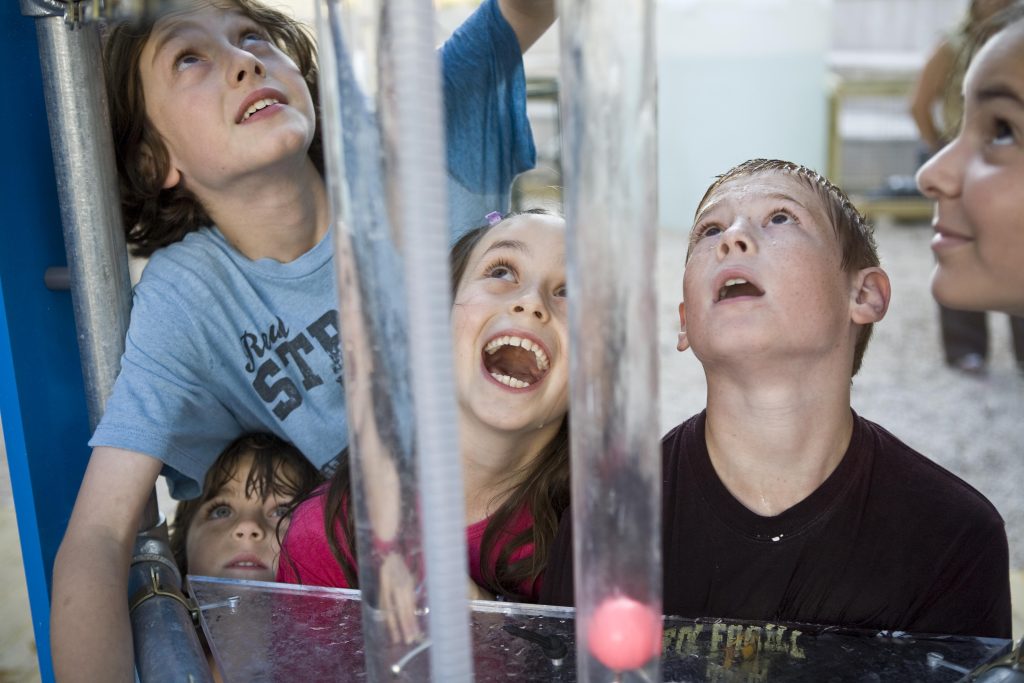
Today the museum remains a place where curiosity takes physical form. Children spin wheels, send balls rolling along tracks, and watch shadows shift across illuminated walls. Parents and teachers often find themselves learning alongside them. The atmosphere is lively, sometimes noisy, and always animated by the excitement of discovery. It reminds visitors that understanding the world does not always begin with answers. Often it begins with a question, a moment of wonder, and the willingness to experiment. Science, after all, belongs to everyone. Sometimes all it takes is the freedom to touch, test, and explore.

Photo courtesy of the Bloomfield Science Museum
Previous
Next